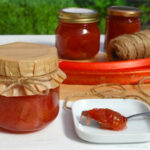
Easy Rhubarb Jam Recipe
Preserve spring rhubarb in a sweet soft-set jam for spooning over desserts or yogurt. Just three ingredients and very simple instructions. Makes 2.5 pints.
Servings 5 half-pint jars
Calories 51kcal
Cost $5
Equipment
- jam jars and lids I'm using Tattler lids
- candy thermometer or frozen plate
- water bath canner or large deep pot
Ingredients
- 2.2 lbs red rhubarb stems 1 kg
- 5 cups white sugar 2.2 lbs / 1 kg
- 1/3 cup lemon juice 85 g / you can use 1/4 cup for a softer set
Instructions
The Evening Before Making Jam
- Rinse the rhubarb stems in cool water and then trim the leaves and the bottom of the stems. Slice the stems into 1/2" pieces and place them in a large pan. Pour the sugar over the rhubarb and stir to cover all the pieces. Cover and then let sit overnight, either on the counter or in the refrigerator.
- Overnight, the sugar will have drawn the juices out of the rhubarb, and the pieces may look slightly shriveled. Pulling the juice out of the rhubarb will help keep the pieces from falling apart completely in the jam-making process.

Preparation
- Before making rhubarb jam, sterilize your jars, lids, and rings. You can run them through the dishwasher or wash them with hot, soapy water. If choosing the latter, make sure to rinse them well and dry them with a clean tea towel.
- If you don't have a candy thermometer, put a small plate in the freezer. Later, you'll need it to test the jam's setting point.
Make Rhubarb Jam
- Place the pan on your hob and bring to a boil. Add the lemon juice and stir carefully, trying not to break up the pieces.
- Reduce the heat and keep the jam boiling until it reaches the setting point. It should take around twenty minutes, and keep stirring gently during this time. You know you've reached setting point when the jam is 220°F (104°C). If you don't have a candy thermometer, you can use the dribble test.
- Dribble a half-teaspoon of jam on the frozen plate you prepared earlier. Wait about thirty seconds for it to cool, and then push it with your finger. If it's clearly firm or starts crinkling up, it's time to move on to the next step. If it's still liquid, you need to boil for longer.
- Spoon the jam into clean, sterilized jars and screw the lids on fully but not super tight. This is called finger-tight. A funnel helps keep the jam from spilling all over the jar while spooning it in.

- You can now leave the jars undisturbed on the counter to seal or continue with the safer step of water bathing the jars*. Water bath canning is only recommended for purpose-made canning jars and lids, such as Mason or Kilner jars.

Water Bathing the Jars
- Ensure the water covers the jars by about an inch and that there is at least half an inch of space between them. The jars should not touch the sides of the pan.
- Wait for the water to come back to a boil. Then, set a timer for 10 minutes.
- After the time is up, carefully lift the jars back out and set them on a towel on the kitchen counter. Leave them for at least 12 hours to cool down. With metal lids, you'll hear pops as the lids seal. Tattler lids don't make this sound, so don't worry if you don't hear anything.
- When cooled, store in a cool cupboard but refrigerate after opening. This jam has a shelf life of 12 months.
Notes
*Though many people don't water-bath jams and jellies outside the USA, it's a far safer food-preserving practice. Water bath canning sterilizes and preserves high-acid foods like jams, jellies, pickles, and chutneys. Doing this extra step will ensure that your preserves won't go off, grow mold, or otherwise become inedible.
Nutrition
Serving: 1TBSP | Calories: 51kcal | Carbohydrates: 13.1g | Protein: 0.1g | Potassium: 25mg | Fiber: 0.2g | Sugar: 12.7g | Vitamin C: 1mg | Calcium: 10mg | Iron: 0.1mg