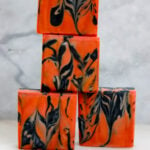
Halloween Soap Recipe (Cold Process)
Make this cold-process Halloween soap recipe by combining two separate batches of naturally colored soap. This recipe is for intermediate to advanced soapmakers and involves making paprika-infused oil to color one batch of soap and using activated charcoal to color a second. Mixing them together creates a flame-like effect, especially in a slab mold. Technical information: 455 g (1 lb) batch, 5.7% superfat, 2:1 water-to-lye ratio.
Servings 4 bars
Cost 10
Equipment
- Mason jar (pint) with lid
Ingredients
Paprika-infused oil
- 1 TBSP paprika spice 6 g
- 150 g olive oil (light colored or pomace)
Lye solution
- 62 g sodium hydroxide 2.19 oz
- 124 g distilled water 4.37 oz
Solid oils
- 114 g coconut oil (refined) 4.01 oz (25%)
- 90 g shea butter (refined) 3.17 oz (20%)
Liquid oils
- 114 g paprika-infused olive oil 4.01 oz (25%)
- 113 g olive oil (light colored or pomace) 4.01 oz (25%)
- 24 g castor oil 0.85 oz (5%)
Additives
- 1.5 tsp activated charcoal 3.6 g
- 1.5 tsp may chang (litsea cubeba) essential oil 6 g (optional)
- 1.5 tsp folded orange essential oil 6 g (optional)
- 10 drops cinnamon bark essential oil (optional)
Instructions
Make paprika-infused oil
- Before making this recipe, I recommend reading all the way through. That way, you'll be prepared for each step and know exactly what to expect. Start by making paprika-infused oil, which will tint half the soap batter a vivid orange.
- Measure the paprika and olive oil into a glass jar, then seal it. Leave it in the cupboard for a month, shaking it every few days, or gently warm it to help the paprika infuse the oil. If you choose the latter, set the jar in a shallowly filled crock-pot and leave it on warm for 4-12 hours. The water should ideally come up to the oil level in the jar.
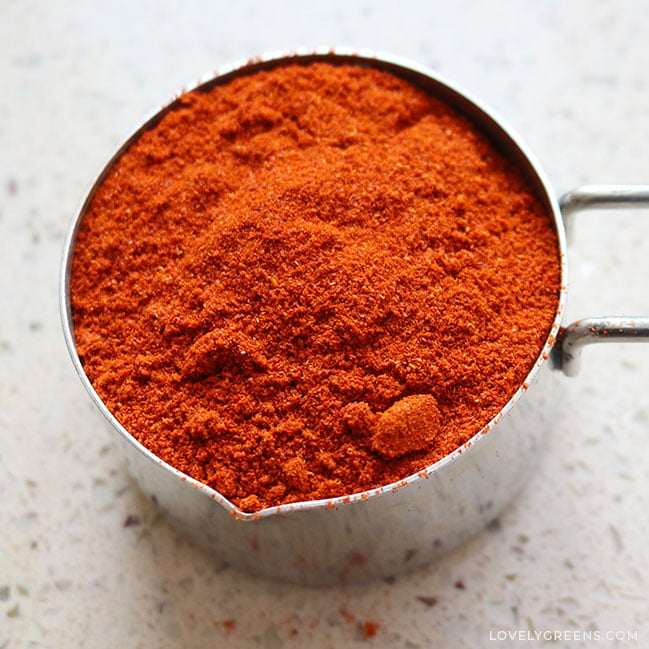
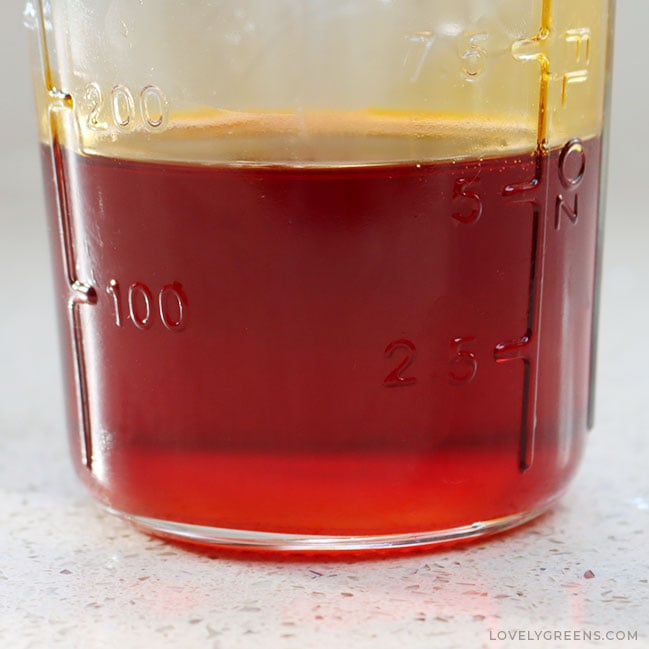
- After the time is up, strain the paprika spice from the oil using a cheesecloth-lined sieve. Measure the clear red-orange oil for this recipe—you will probably have a little extra, so measure it by weight.
Preparing to make cold process soap
- Cold-process soapmaking is chemistry, and this recipe uses lye. Lye is a caustic substance that is completely neutralized in the soapmaking process, but it can be harmful if not handled correctly. Please read this soap making safety guidance before proceeding.
- Prepare your workstation with the tools and equipment. Put on rubber or nitrile gloves, eye protection, and an apron.
- Carefully pre-measure the ingredients using a digital kitchen scale. In this soap recipe, you use the listed ingredients to make two batches of soap at once. This means you'll need to split many ingredient amounts in half and measure them into two different containers or pots.
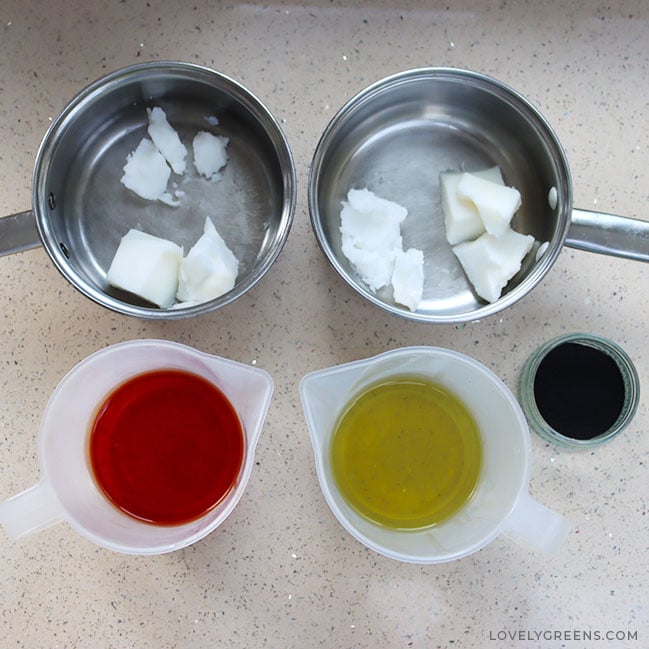
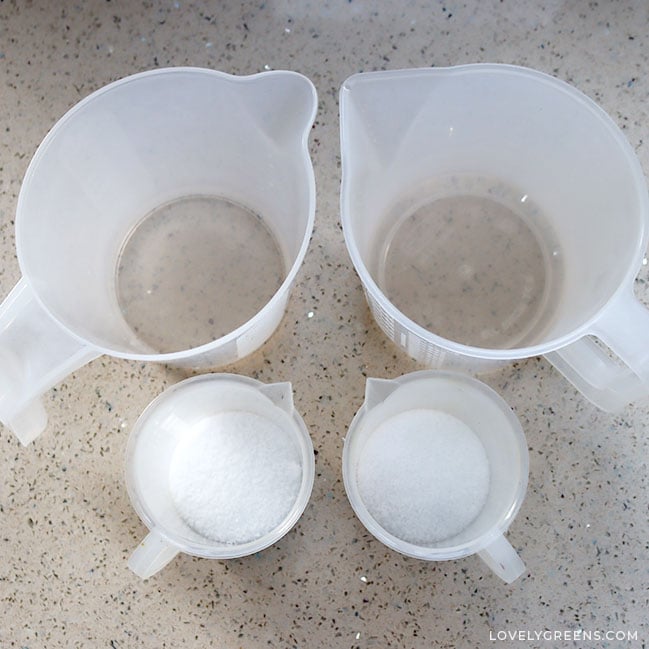
- - Put half the shea butter and half the coconut oil into each of the two pots. Each pot has both shea butter and coconut oil, but just half of the amount called for in the recipe.- Put half the castor oil and the full amount of paprika-infused oil into one jug- Measure the other half of the castor oil and the full amount of plain olive oil into another jug. - Split the water into two heat-proof jugs. Make sure that the water amount is as exact as possible.- Split the lye into two additional heat-proof jugs. - If you are using essential oils, split the amounts called for in half and measure them into two small glass or ceramic dishes. Each dish contains half of each essential oil called for.- Measure the activated charcoal into another small dish.
Mix the lye solution
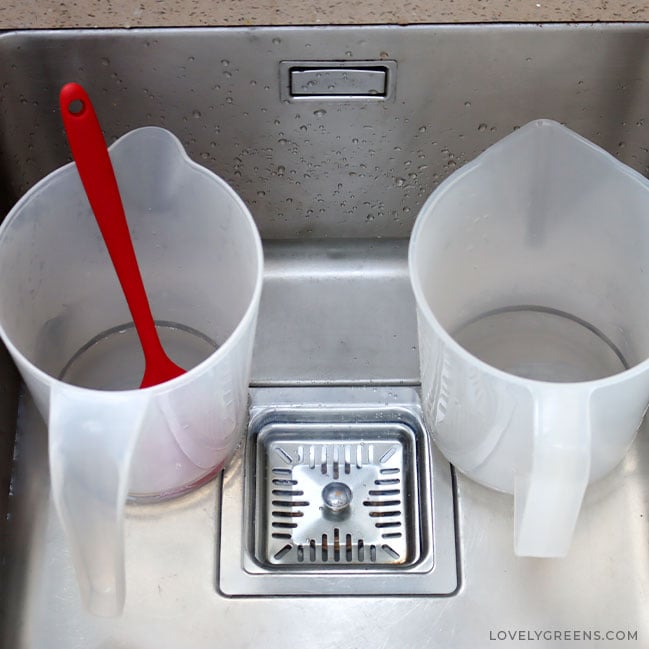
- The first step in this Halloween soap recipe is making two separate jugs of lye solution. Pour the two amounts of lye (sodium hydroxide) into their corresponding jug of water. Be careful and do this in a well-ventilated area, as it will produce a lot of heat and steam. Try not to breathe it in. Mix well and then leave the lye solutions to cool in a sink filled shallowly with cold water.
Preparing the oils
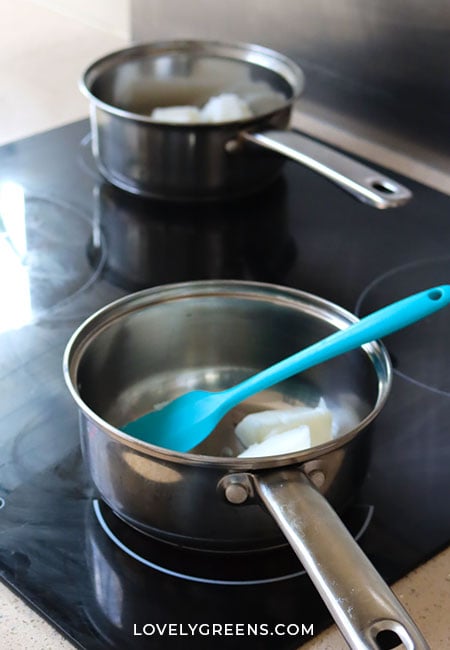
- Place both pots of solid oils on the stove or hotplate. Melt them simultaneously on very low heat.
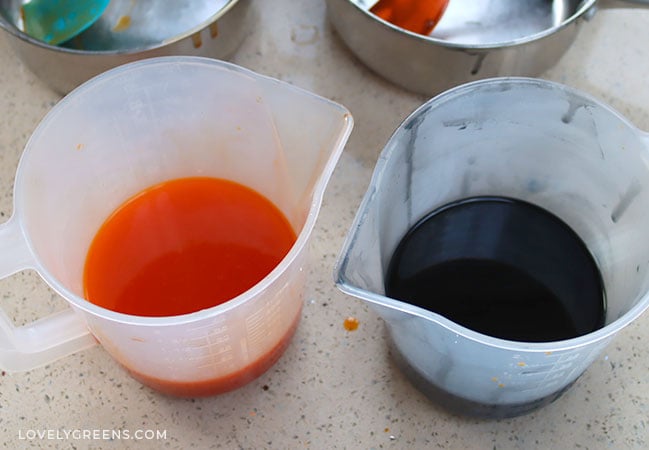
- While the solid oils are melting, mix the essential oils into the liquid oils*. You have one jug with castor oil and paprika-infused olive oil, and the other with castor oil and uncolored olive oil. Pour in the essential oils—one amount into one jug and the other into the second jug.
- Next, add the activated charcoal powder to the jug of uncolored liquid oils. Stir it in well.
Bring the ingredients to emulsion
- When the solid oils are fully melted, remove the pans from the heat and set them on potholders on your worktop. Pour one pan of melted oil into the jug of orange liquid oil and the second pan of melted oil into the jug of black oil.* Stir each well with separate spoons or spatulas.
- Measure the temperatures of the lye solution and the oils. You should aim to cool them both to about 95-100°F / 35-38°C. Use an infrared thermometer or a digital kitchen thermometer. With four separate containers of ingredients to monitor, this can be challenging, so just aim for them to all be within about ten degrees of one another and around the target temperature.
- Prepare to work quickly from this point, so have the mold, skewer, and immersion blender ready.
- When both lye solutions and both oils reach a good temperature, it's time to get to work. Pour one lye solution into the orange oils and stir briefly with a spoon or spatula. Pour the second lye solution into the black oils and stir that one too.
- Dip the stick blender into the orange oils and mix it into an emulsion*. This is the stage where the oils and lye solution have combined, and the mixture looks opaque but just before it starts showing signs of thickening into trace. You do not want it very thick at this stage.
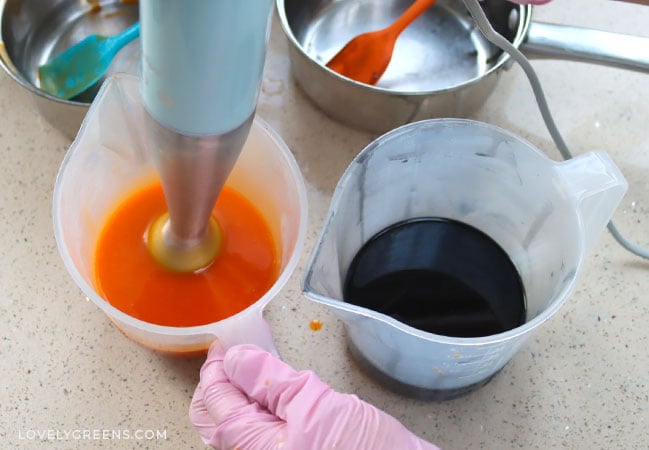
- Then use the same immersion blender to emulsify the black oils and lye solution. It may come together more quickly than the paprika-tinted portion.
Molding and mixing the soap batter
- It's time to pour the soap batter into the soap mold. Take precautions not to muddy the orange soap with the black, so use separate spatulas/spoons to help get it into the mold.
- Begin with the black; pour it into the 4 quadrants of the soap mold. Together, you will use up about a third of the batter.
- Next, pour the orange batter into each spot where you previously poured the black. Again, you will use about a third of the batter.
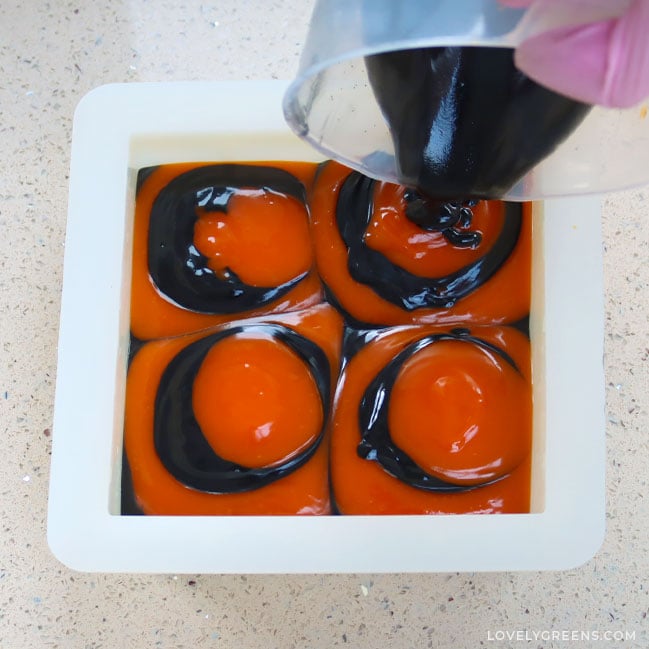
- Use spatulas to scrape the remaining soap batter from each jug and drizzle it on top. Try to get it all out and into the mold.
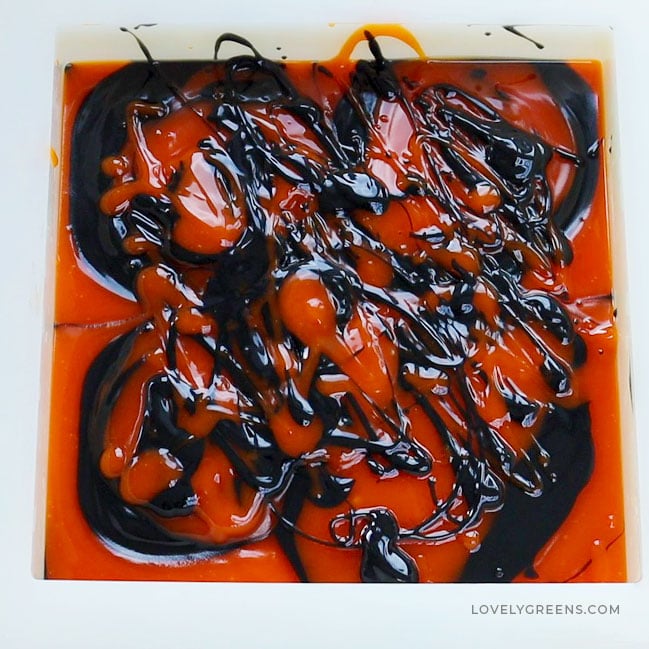
- Settle the mold by lifting it up and tapping it on the counter. Next, take up a skewer or chopstick.
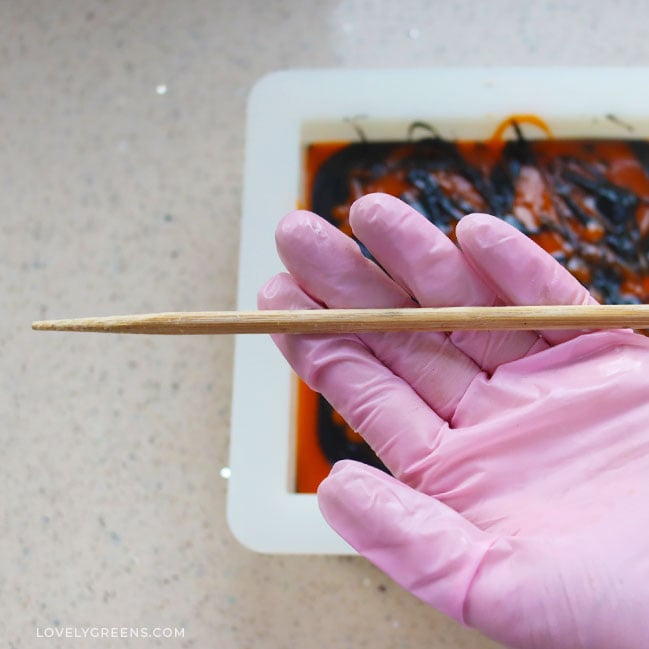
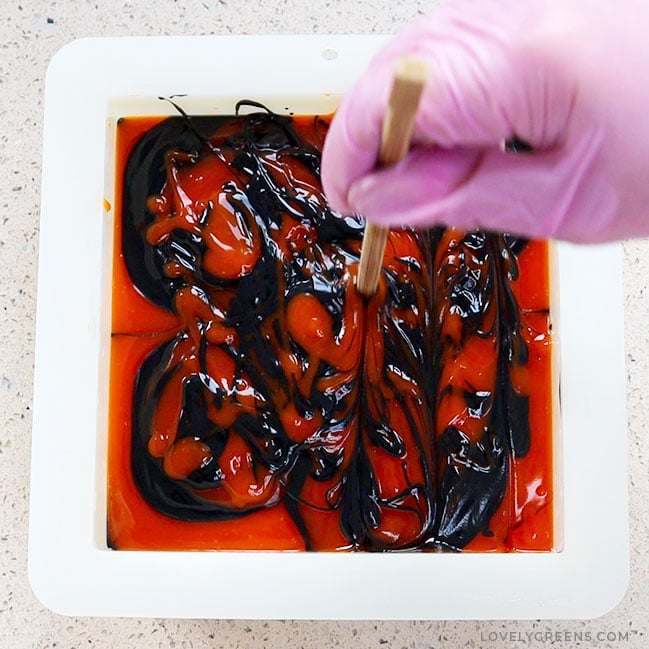
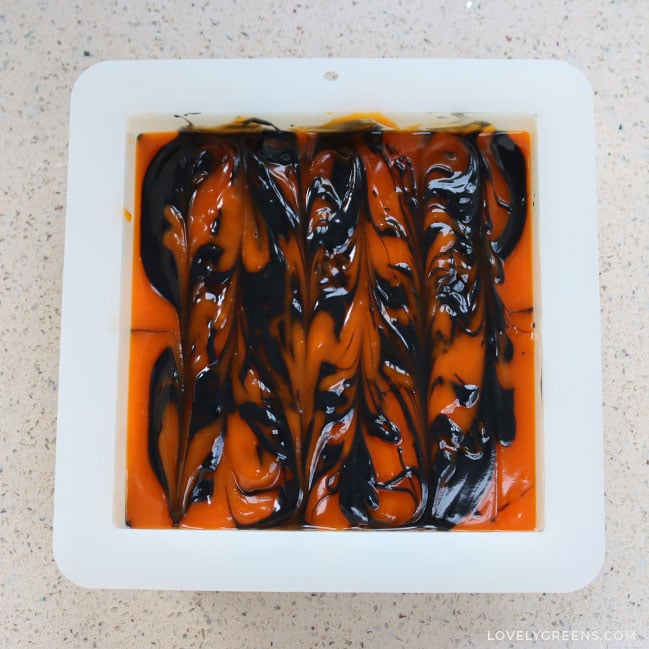
- To create the design, start at one corner, dip the skewer all the way to the bottom, then pull it in one motion across to the other side. Slide or reposition the skewer about an inch down, then pull it back in one motion to the other side. Repeat this all the way down the soap. Stop and don't swirl any further, or you'll muddy the colors.
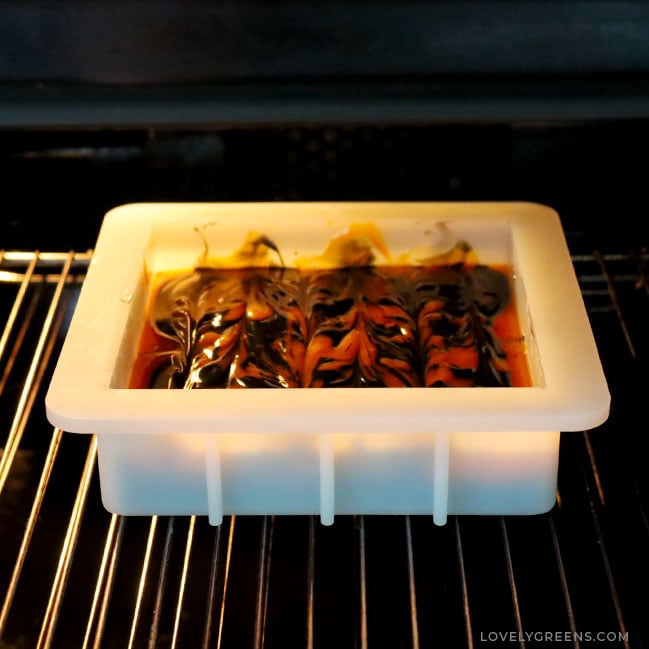
- Ensure the soap gels, however you prefer. I like setting the soap in a pre-warmed oven (75℃/170℉), closing the door, turning off the heat, and leaving it inside overnight.
- The next day, take the soap out of the oven and leave it in a safe place for another day.
Cure the soap bars
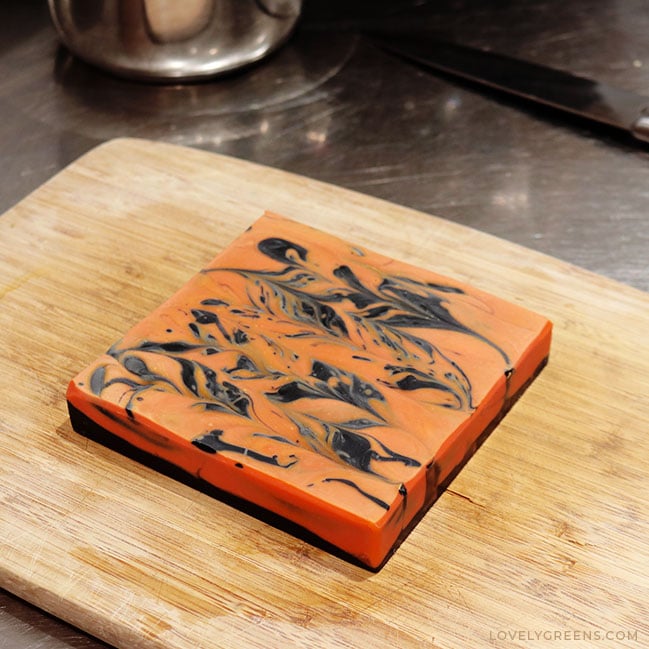
- Two days after making it, remove the soap block from the mold and cut it into bars. You can use a fine wire or soap cutter, but a kitchen knife works for this recipe, too. The size is up to you, but I cut it into 4 chunky bars. One thing to watch out for when cutting is that the charcoal colored portions can smudge onto the orange areas if you're not careful. Try to cut each bar in confident single cuts and avoid wiggling or sawing the wire or knife back and forth.
- Cure it for 4-6 weeks. Curing soap means leaving the bars spaced out on a protected surface, out of direct sunlight, and in an airy place. This lets the extra water evaporate off. Curing also makes the soap better to use and gentler on the skin.
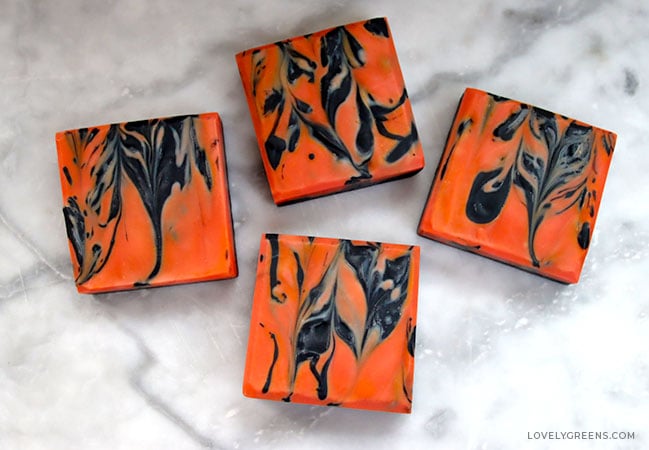
- Although optional, I also beveled the edges of these soaps using a potato peeler. I also gently washed them with warm water and let them dry again. This step makes the orange and black colors pop!
- Once made, this soap can last up to two years, though the essential oil will likely begin to fade after about three to six months. Check the oil bottles that you're using, though. Use the closest best-by date you find as your soap's best-by date.
Notes
*Mixing the essential oils into the liquid oils helps save a step later on in the soapmaking process.
*This is especially important for a 1x batch of this soap recipe. Immersion blending in a pan will be difficult if the oil and lye solution level is too shallow. Using a jug helps keep the immersion blender head submerged.
*The technique I use is to hold the immersion blender head stationary at the bottom of the pan/jub and blitz it for just a couple of seconds. Then I turn it off and stir the soap batter, using the blender as a spoon. Repeat until the mixture reaches an emulsion. If it starts to trace (thickens to a custard-like consistency), stop and work very quickly from there.