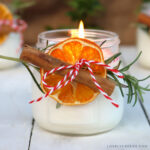
How to Make Homemade Candles
Instructions for making natural wax candles scented with Christmas-inspired fragrance oil. The wax you use for these homemade candles can be soy wax, rapeseed wax, or coconut wax, and you can pour the candles into heat-resistant glass containers such as 8-oz Mason jars. For precision, I highly recommend using weight to measure ingredients; however, I've included volume measurements for your convenience. The fragrance load for these candles is 9%* and the double-pour technique ensures a nice, smooth finish. Wick recommendations are also listed.
Servings 3 candles
Cost $16
Equipment
- 2 two stainless steel pans (one able to fit inside the other) to create a double boiler
- 3 half-pint canning jars Mason jars, Kilner jars, or similar
- 3 pre-tabbed wicks * ECO 12, Wedo VRL 22, LX 16 or 18
- 3 unbroken chopsticks or clothespins
- digital kitchen scale or measuring cups and measuring spoons
- silicone spatula or spoon
- pouring jug with spout optional
- greaseproof paper or newspaper / optional
- hot glue gun or wick stickers/tabs
Ingredients
- 4 cups soy wax 525 g / or coconut wax or rapeseed (canola) wax
- 10 tsp Christmas fragrance oil * 54 g or 50 ml / or another fragrance suitable for candles (optional)
- baking twine optional
- dried orange slices optional
- cinnamon sticks optional
Instructions
Preparation
- Gather all the materials and equipment in the place you plan to work. Though optional, you could cover surfaces with grease-proof paper (or newspaper) to help with clean-up. However, plant-based waxes are generally easy to clean up with hot soapy water.
- Measure the wax into the smaller pan.
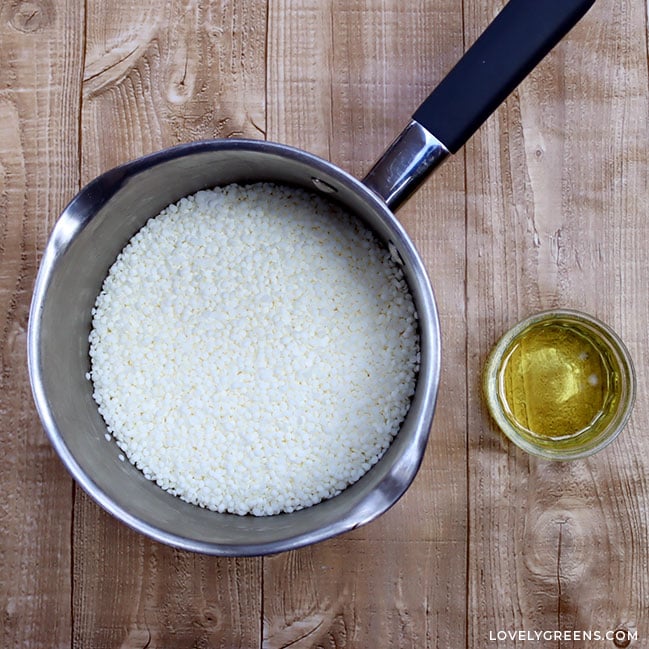
- Measure the fragrance oil into a small glass or ceramic dish. Keep it out of reach of children or pets.
- Center and adhere the wick tab (the metal end of the wick) to the bottom of each jar. Use a hot glue gun, wick stickers, or glue dots.
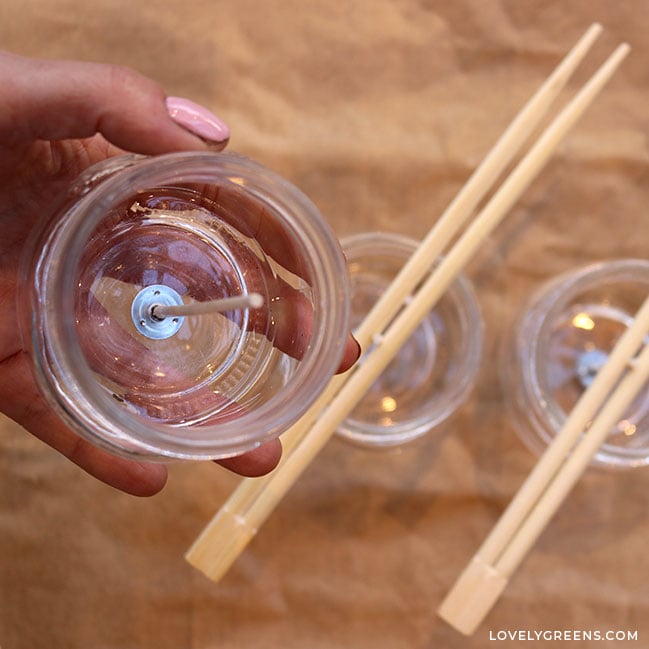
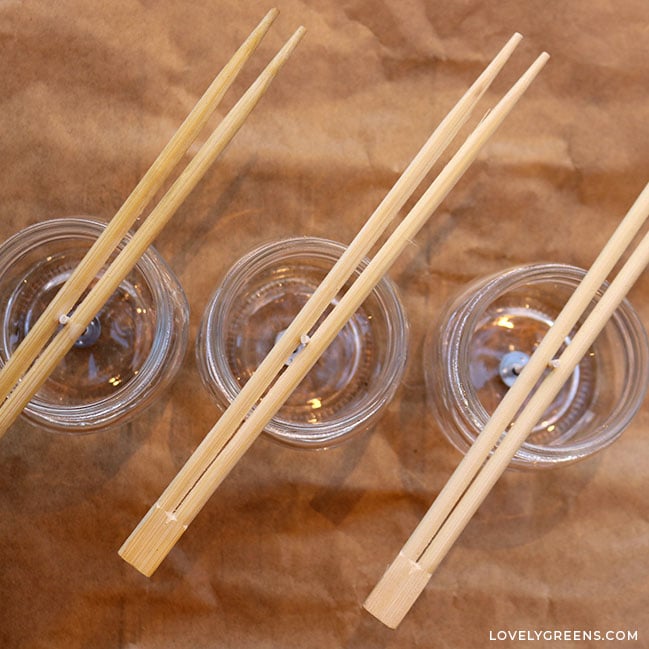
- I recommend using unbroken chopsticks or clothespins to hold the wick vertically. You could also wind the wick around a pencil or popsicle stick. Once wax is poured in, the wick may slump over if it's not held up.
Make the Candles
- Melt the wax gently on indirect heat. Fill the larger pan with water to a quarter-full and bring it to a boil. Lower the heat to medium and then float the smaller pan containing the wax on the water. Don't allow water to get into the smaller pan.
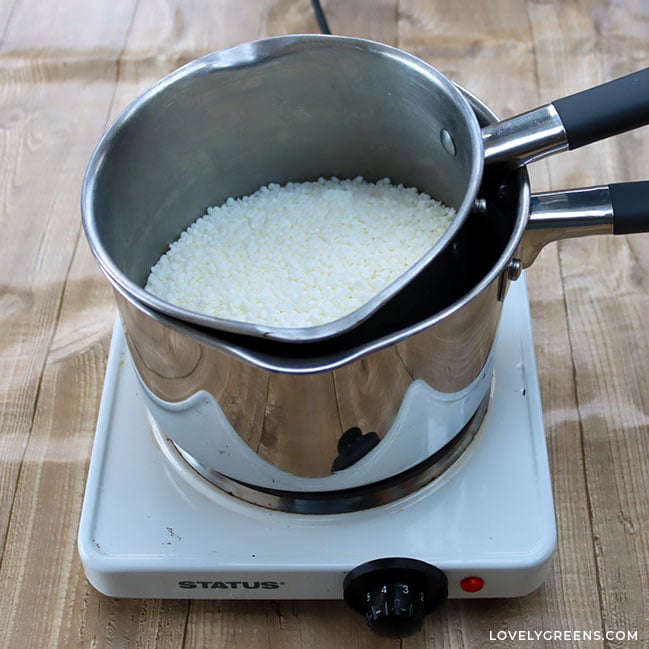
- Melt the wax until completely liquid and clear, then take the pan out and set it on a potholder.
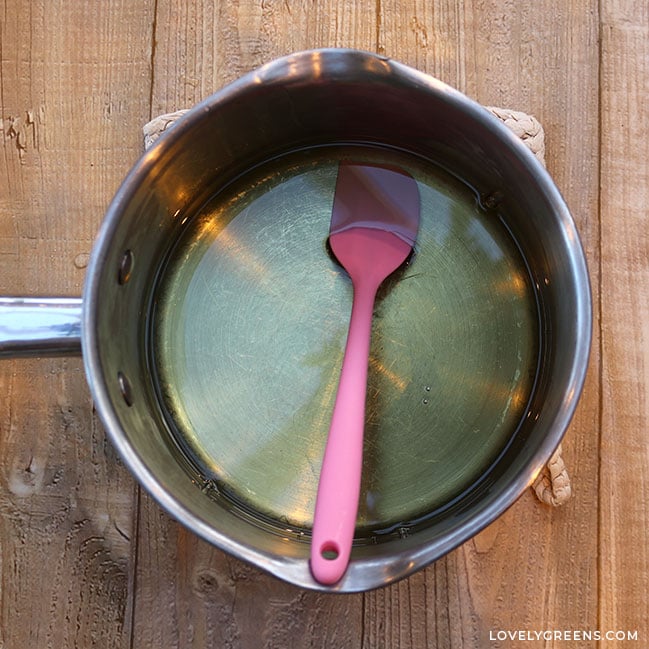
- Take the soy wax's temperature—you want it to be 180-185°F (82-85°C)*. At this temperature, pour the fragrance into the melted wax and stir well.
- Stirring regularly, reduce the wax temperature to 135-145°F (57-63°C)*.
- When the temperature is right, stir and then pour the wax into the candle containers. Either directly from the pan or by transferring it to a pouring vessel. Only fill the containers with about 85-90% of the wax you intend to pour into them. You'll have wax left in the pan at this point—just set it aside until later.
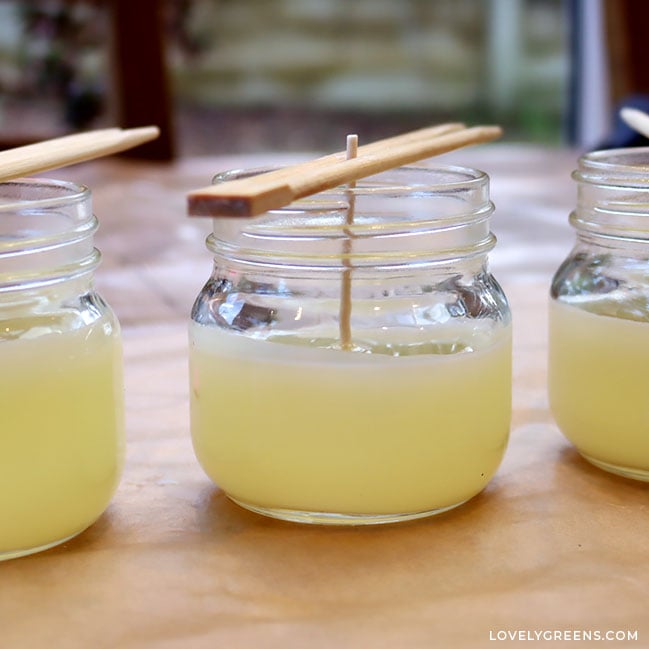
- Allow the candles to cool and harden completely at room temperature. This can take several hours, but I tend to leave them overnight. When they're fully cooled, you might notice that some of the tops aren't smooth, but don't worry. Covering them will be easy with the two-pour method we're using.
- When the candles have hardened, remelt the leftover wax to 135-145°F (57-63°C)*. When at that temperature, pour it into the candle containers, topping them up and covering any imperfections.
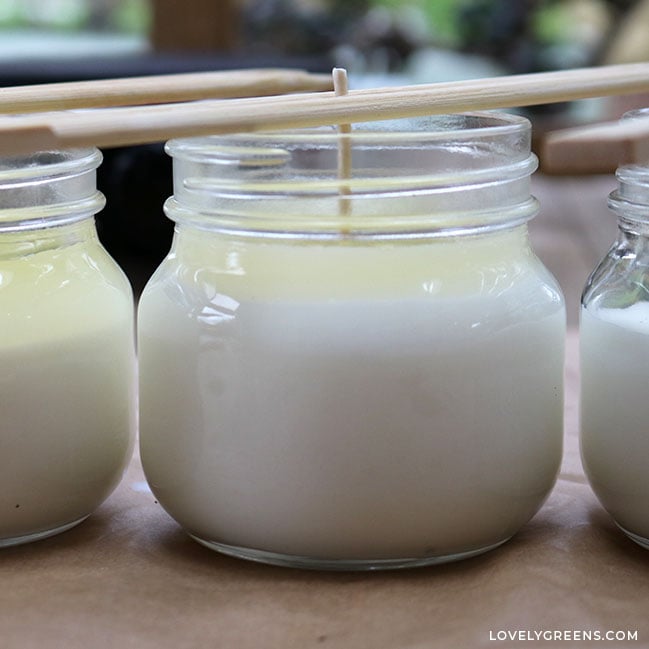
- Allow the candles to cool and harden, undisturbed and at room temperature. After a day, you can remove the chopsticks and trim the top of the wick down to 1/4" (6 mm). If it's awkward to use scissors, you can use sharp nail clippers.
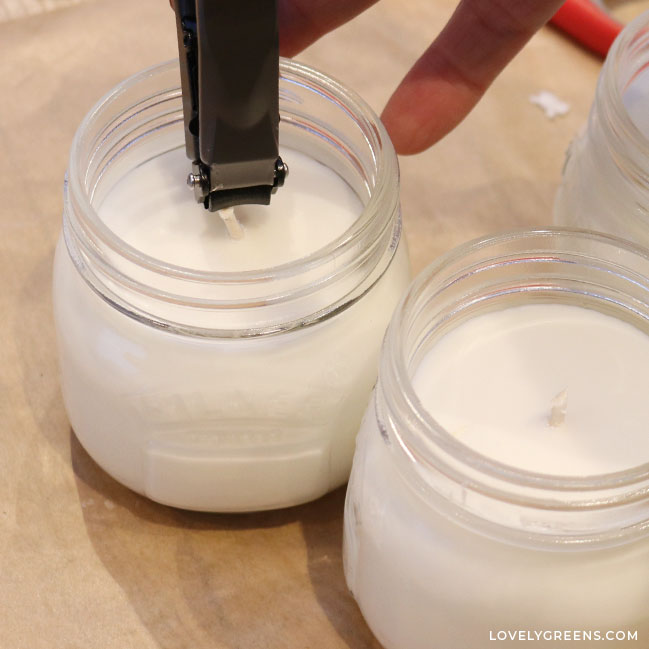
- You can start using homemade candles two days after making them, but the scent will be much better if you cure them first. To do this, leave the candles uncovered or with the lids only lightly covering them, and let them sit at room temperature (68°F/20°C) for two weeks. That's it. That one little step boosts your candles' fragrance and scent throw.
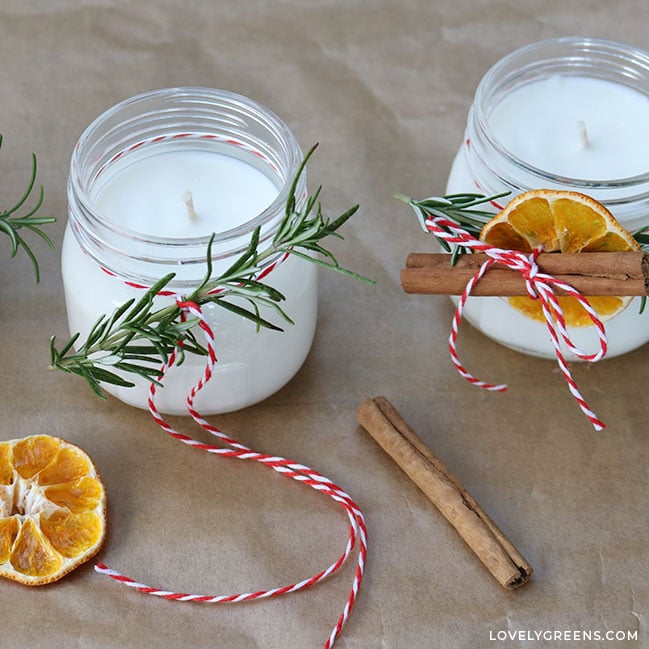
- To make them look lovely as gifts or products, decorate the jars with labels, ribbon, string, dried fruit, and spices. Whatever your decorations, adorn them so that they won't catch on fire and/or recommend to the recipient to remove them before lighting.
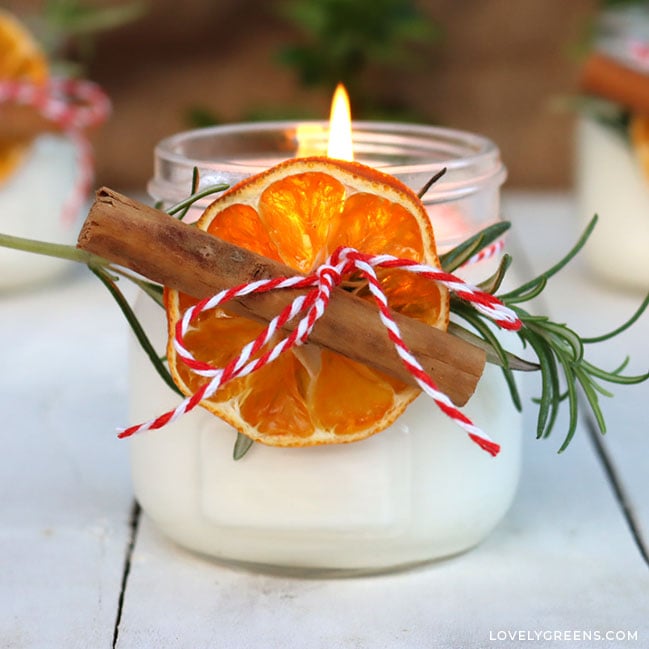
- Homemade candles don't have a strict best-by date, but the fragrance will be at its best if you use them within two years of making them.
Video
Notes
* Many candle fragrance oils permit a 9% load, but double-check yours to ensure that it's safe.
* Measure the inner diameter of the specific containers you're using. Match that diameter up with the recommended wick size from the manufacturer you choose to use.
* If you use pure coconut wax, pour the fragrance oil into the wax at 180°F (82°C). For rapeseed (canola) wax, the temperature is lower at 160-165°F (71-74°C). Different wax types and wax blends have different optimal temperatures for mixing in the fragrance oil. Always refer to the wax manufacturer's guidance.
* Candle pouring temperatures can vary depending on the wax type, wax blend, and brand. Double-check the ideal temperature with the brand you're using to ensure that the candles you make have smooth tops, less frosting, and a good cold throw (smell nice when unlit).