
5 Simple Herbal Remedy Recipes
This article contains affiliate links. As an Amazon Associate, I earn from qualifying purchases.
A collection of simple herbal remedies that you can make with plants from the garden. Each is completely natural and useful for treating minor cuts, bruises, and burns.
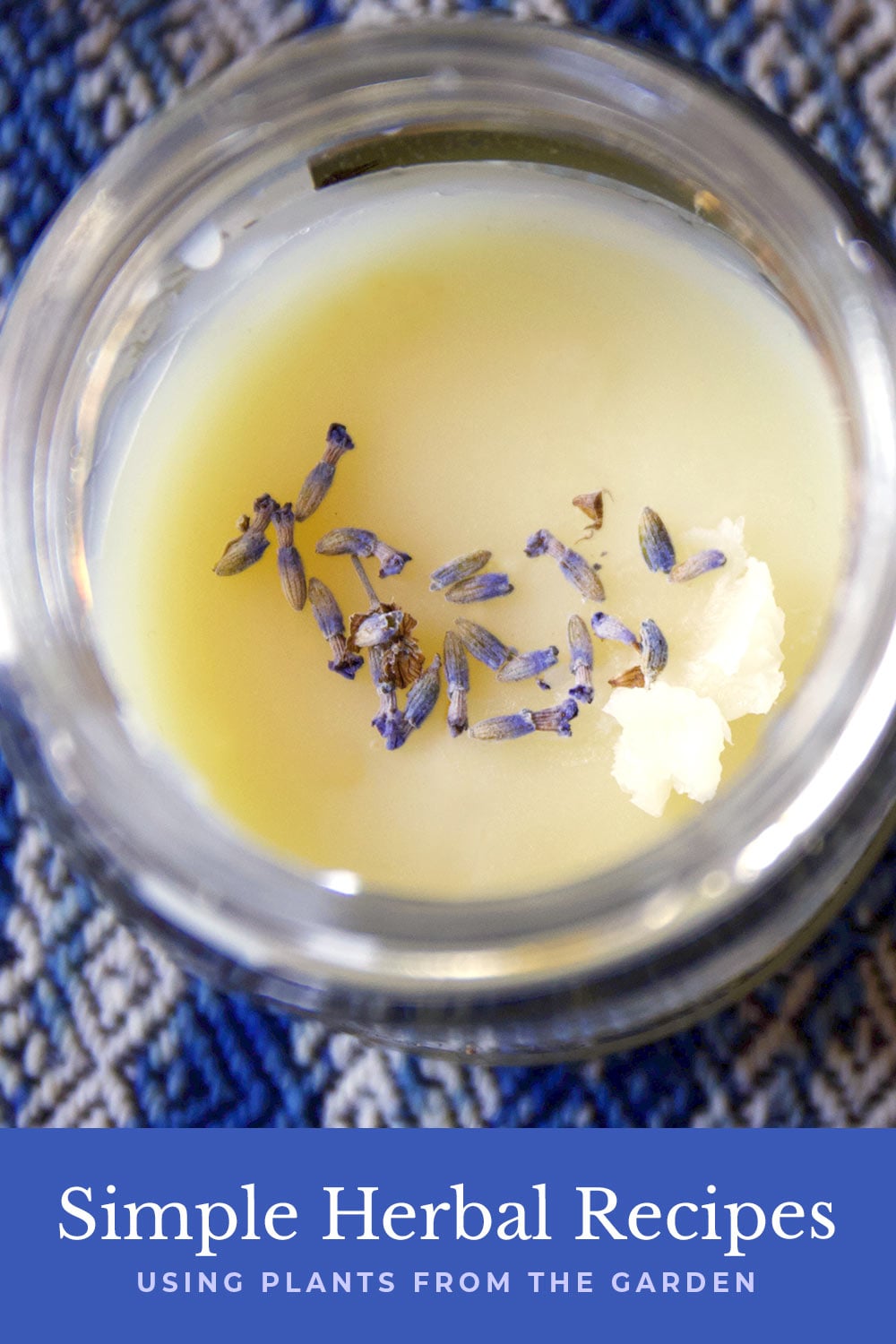

Stephanie Hafferty, well-known for her passion for no-dig gardening, has just released a new book, The Productive Garden. In it, she not only walks us through the importance of soil and of creating a kitchen garden, but also shares useful ways to use the harvest. They include her favorite preserves for the larder, homemade cleaning products, and simple herbal remedies. The following is an excerpt from her book, found on page 232.
Traditionally, cottage gardens were used as an apothecary as well as for sustenance and included plants used to make simple remedies. Learning how to make salves and other natural herbal remedies is an enjoyable skill that adds another dimension to the productive garden.
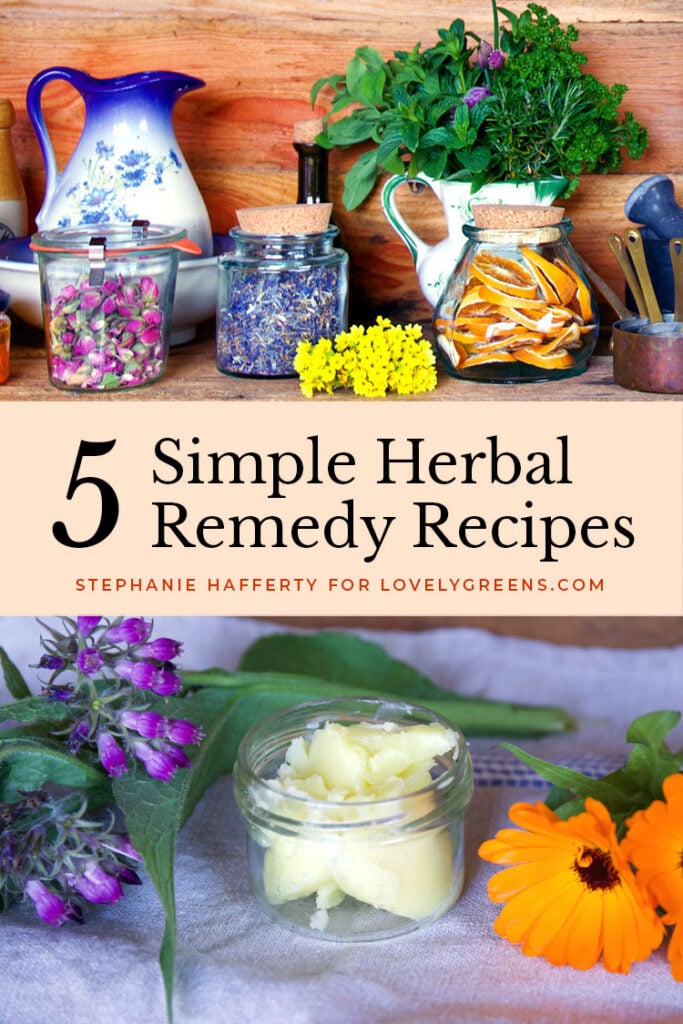
Many of the herbs and flowers grown in my homestead have traditional healing properties, used to boost the immune system and soothe aches and pains. Here are some of my favorite recipes for healing remedies.
Aloe Vera for Soothing Burns
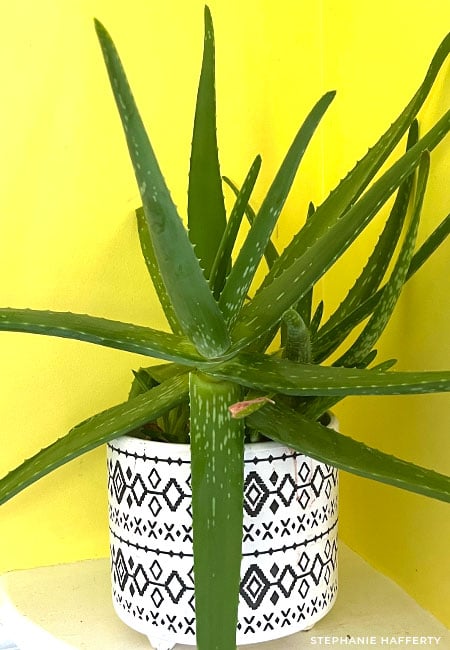
Keep one or two aloe vera plants on the windowsill in the kitchen or bathroom for instant skin-soothing. The gel inside the leaves is a gentle healer for itchy skin and can help to soothe sunburn and minor burns. Just open up part of a leaf and rub the green gel within onto unbroken skin.
Calendula and Lavender Wound Wash
This is a gentle way to clean minor wounds (think garden scrapes and scratches, not deep cuts). I keep a mix of dried calendula and lavender flowers in a jar so that I can quickly make this. Calendula and lavender can help to disinfect wounds and speed up healing. As it takes 15 minutes to brew, always wash the wounds in clean water while you wait.
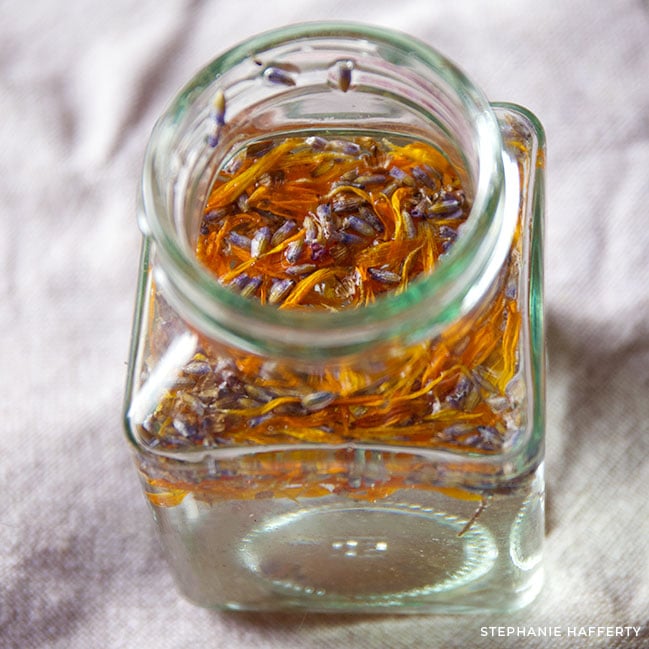
- 1 tbsp fresh calendula (or ½ tbsp dried)
- 1 tbsp fresh lavender (or ½ tbsp dried)
- 200 ml (6.75 fl oz) boiling-hot water (about a cupful).
Steep the flowers in the water for around 15 minutes, then strain. Treat the affected area with the wash using a clean cloth.
Homemade Comfrey Oil
Comfrey oil helps with the healing of bruises, bumps, and joint and muscular pain. Never use comfrey oil or salve on open wounds; it can cause the wound to heal and trap dirt or microbes inside, leading to infection. The oil and salve are for external use only and should not be consumed.
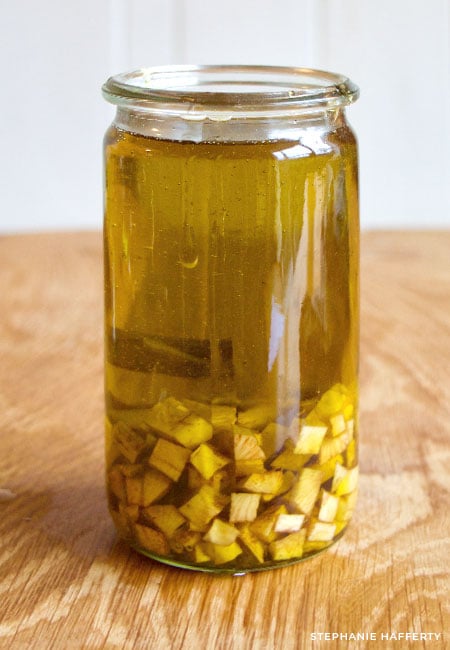
To make infused oil, I harvest comfrey root in early spring and late autumn. Dig out a good-sized chunk, then scrape off the soil and prepare the root straight away. It is much easier to peel and chop fresh roots.
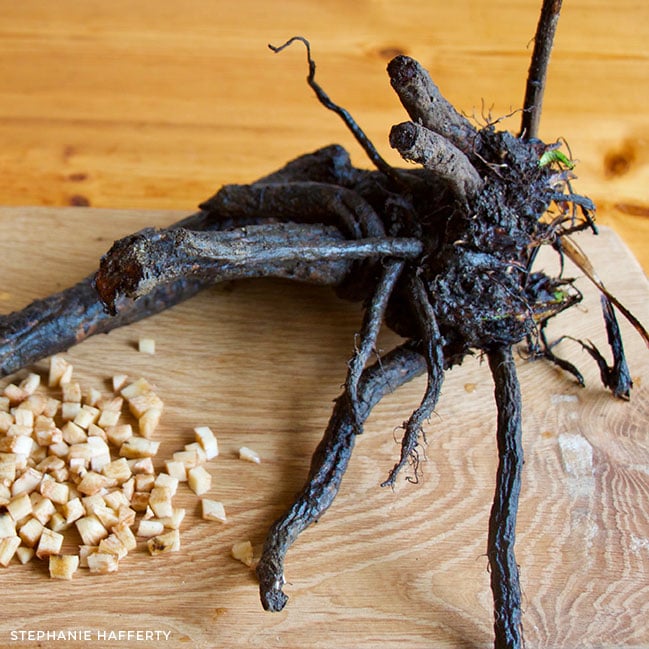
Peel carefully, then chop into tiny 5mm (1/4-inch) cubes. Spread out and leave to air dry for 24 hours. (You can also fully dry the cubes and store them for later use.) Half-fill a glass jar with the root pieces, then pour over the carrier oil to fill the jar.
Replace the lid and leave it somewhere cool and dark for 6 weeks, shaking every few days. When it is ready, strain through a muslin-lined sieve and discard the root pieces. Pour into a labelled jar and seal. This should last for a year.
Slow Cooker Comfrey Oil
- Pour the oil and ingredients into a heat-proof container, such as a preserving jar, leaving 2cm (1in) or so between the oil and the top. Replace the lid.
- Place the jars in the slow cooker on low for 8 hours, with about 5–7cm (2–3 in) of water. Check periodically and top up with water if necessary.
- Leave to cool.
Comfrey and Calendula Salve
This salve recipe is a soothing ointment that is especially good for tired, aching joints. Make 50 ml (13/4 fl oz) comfrey oil and 50 ml calendula oil, then follow the salve method:
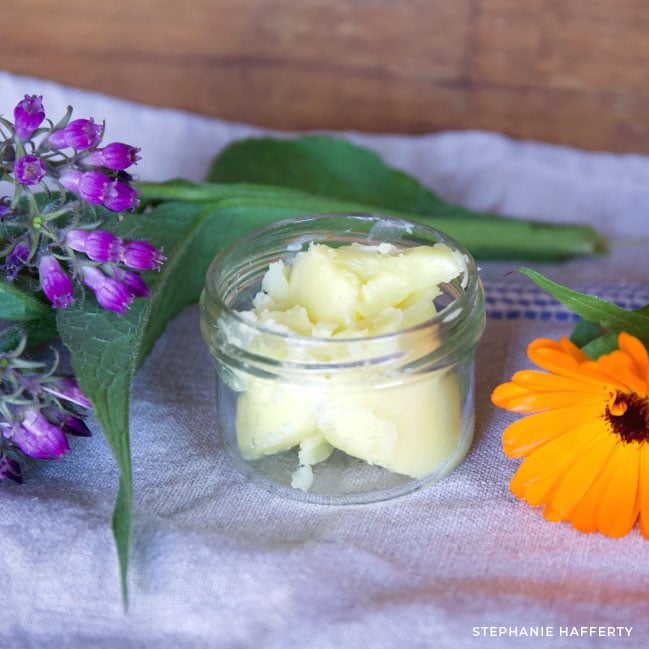
You will need:
— heatproof bowl and pan to make a bain marie
— spoons to stir
— jars to store the salve
— 50 ml (1.69 fl oz) comfrey-infused oil
— 50 ml (1.69 fl oz) calendula-infused oil
— 15 g (1/2 oz) beeswax or vegan alternative
- Grate the beeswax if not using granules.
- Place in the bain-marie with the oil over low heat, and stir until the wax has melted.
- Remove from the heat and carefully pour into the jars.
- Seal, label and leave to cool. Keeps for at least six months.
Comfrey and Lavender Salve
Make 50ml (13/4fl oz) comfrey oil and 50ml lavender oil. Then, using the salve method, make it into a gentle salve that combines the healing properties of comfrey and lavender, and smells gorgeous.
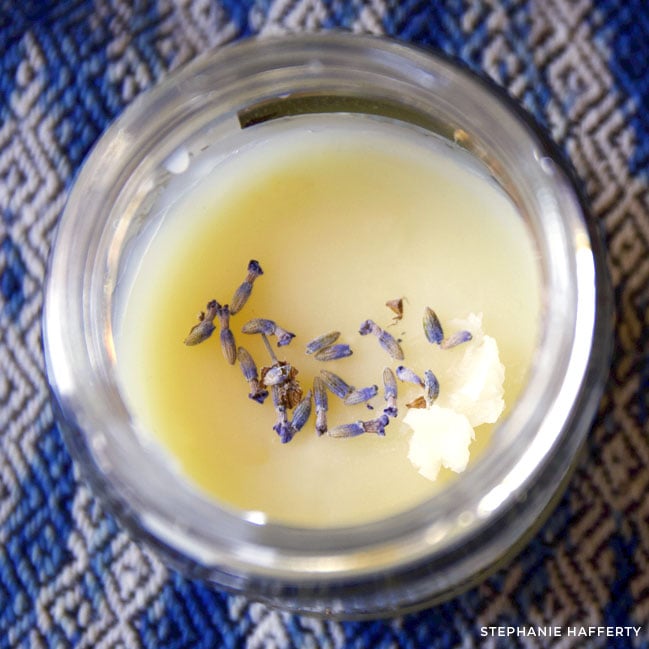
Alternatively, fill a glass jar one-quarter with comfrey leaves and one-quarter with lavender flowers. Fill with carrier oil and place in a cool, dark place for 2 weeks to infuse. Shake daily, then strain and pour the infused oil into a clean jar.
You will need:
— heatproof bowl and pan to make a bain marie
— spoons to stir
— jars to store the salve
— 50ml (1.69 fl oz) comfrey-infused oil
— 50ml (1.69 fl oz) lavender-infused oil
— 15 g (1/2 oz) beeswax or vegan alternative
- Grate the beeswax if not using granules.
- Place in the bain-marie with the oil over low heat, and stir until the wax has melted.
- Remove from the heat and carefully pour into the jars.
- Seal, label and leave to cool. Keeps for at least six months.
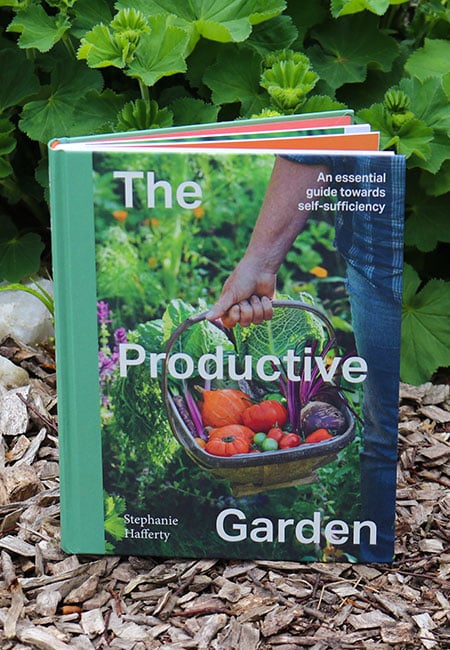
The Productive Garden
These herbal remedy recipes are from The Productive Garden, by Stephanie Hafferty. It’s a down-to-earth, homestead-gardening book that will guide you to growing a garden that nourishes you from the inside out. Here are even more ideas to inspire you to grow your own medicine:
- Elderberry Syrup Recipe
- Folk Village Herbal Medicine Garden
- How to Grow Valerian (a natural sleep remedy)
Thank you madam Stephanie. How can I prepare and use comfrey leaves to treat bone fractures?
Thank you for recipe with I had the print option
As my younger brother and I both went to school at the Prince of Wales in Kenya. We worked on the farm with my father when we were a little older. We also had our own gardens. I enjoyed this process of making infused oil. I have comfrey in my garden to keep the insects away. Now I know how to make infused oil. I want to try the recipe. You don’t mention quantities, I assume then that the stronger you want it, the more you will add.
Hi Danie, and lovely to hear a little about your background. You might want to check out this detailed and printable comfrey oil recipe. I’m not sure what oils you have available in Kenya, but if you can use olive oil, the oil will have a longer shelf life than other liquid oils.