
Crushed Tomatoes Recipe for Home Canning
This article contains affiliate links. As an Amazon Associate, I earn from qualifying purchases.
A traditional recipe for preserving fresh tomatoes as bottled crushed tomatoes. Once canned, the jars are shelf-stable and can add flavor and body to pasta sauce, soup, curries, and casseroles. This simple recipe comes in handy when tomatoes are in season!
It’s exciting when my first tomatoes begin to ripen, and they always get picked and served fresh (we love a Caprese salad!). As the season progresses, there can be mountains of them, though, and if I don’t do something to preserve them, they’ll go to waste.
One of the most traditional ways to preserve tomatoes is to can them, and there are many ways to do it. Crushed tomatoes are one of the most versatile, so they’re my go-to choice. They’re neither smooth nor very chunky, and you make them by cooking fresh tomatoes until they reach a soft consistency. Then add a couple more simple ingredients, spoon it into jars, and process it in a water bath canner. They’re a staple in my kitchen and ideal for adding flavor to soups, stews, curries, chilies, and loads of other dishes.
The Best Tomato Varieties for Canning
It’s true that tinned tomatoes are inexpensive, but homemade flavor cannot be beat. You also have much more control and can avoid unwanted ingredients and materials, such as preservatives or BPA-lined lids. Preserving homegrown tomatoes in jars is also incredibly satisfying. Turning a homegrown harvest into jars of wholesome flavor fills me with pride—as I’m sure it will with you, too.
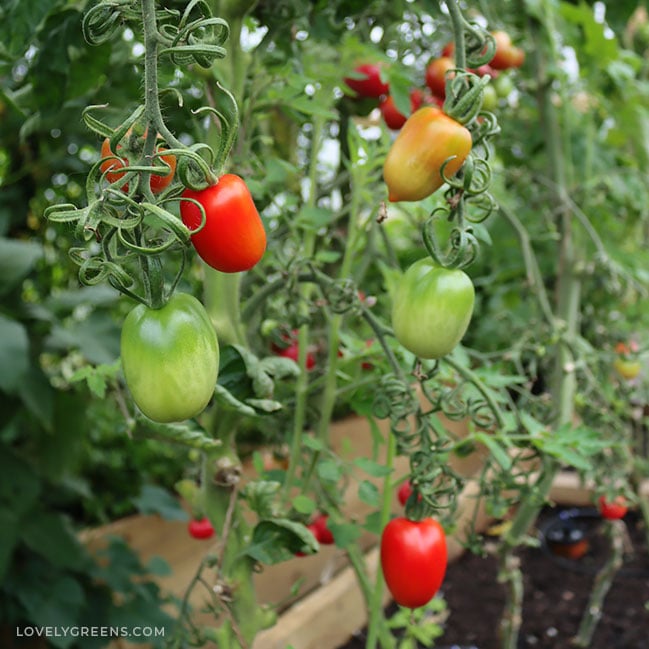
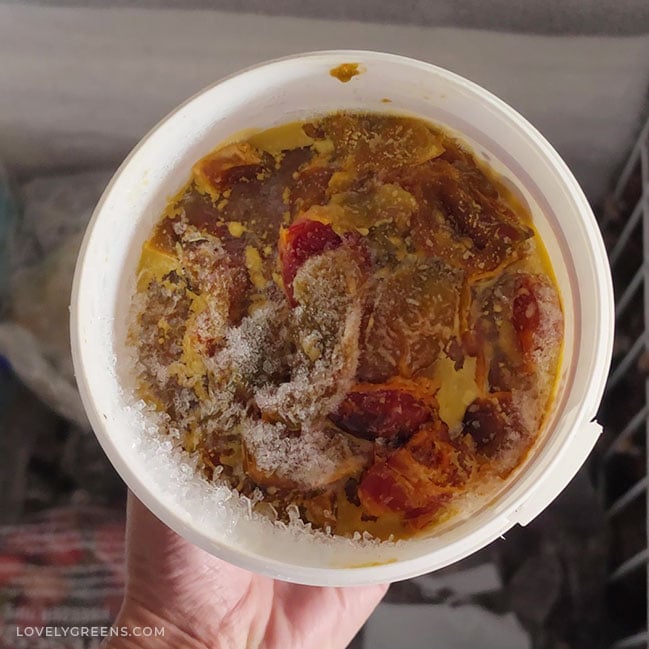
I grow many tomato varieties, and I admit that I’ll preserve any that have good flavor. I cut cherry tomatoes in half, roast them (seeds and all), and freeze them in old yogurt pots. Defrost one and you have a chunky sauce that you can use in everything from tomato sauce to salsa.
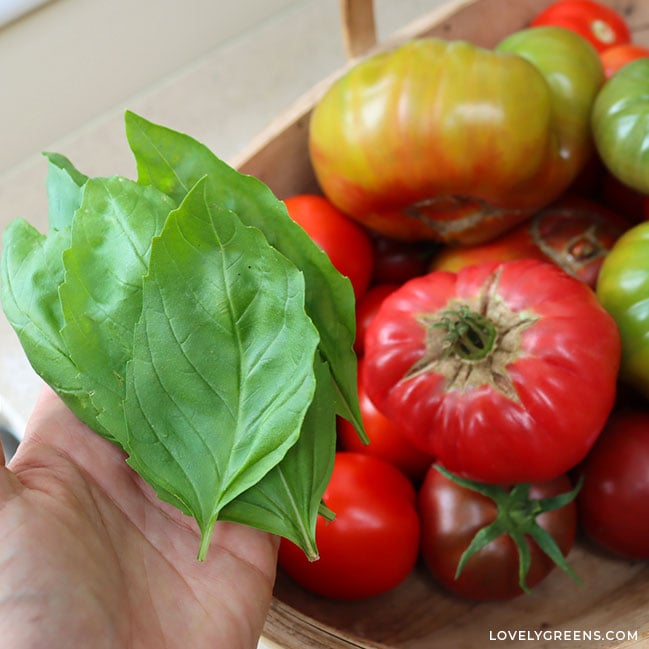
However, being choosy about the varieties you use to can tomatoes can ensure the best flavor and texture. They can also reduce waste as you clean and prepare the fruits. Tomatoes with dense flesh and fewer seeds are the traditional choice. These are typically paste tomatoes such as Roma, San Marzano, and Amish Paste. Once you skin them, they are a dream to clean and chop. You also don’t lose much volume as you prepare them since there aren’t huge pockets of seeds and gel to remove.
Canning Tomatoes vs Freezing
Freezing tomatoes is the easiest way to preserve them for later. I have a chest freezer in the garage filled with all sorts of frozen berries, fruit, and vegetables. With tomatoes, I either freeze them raw and whole or roast them and freeze them as I detailed above. My freezer only has so much room, though, and it uses electricity constantly. That’s why canning tomatoes is often the better option.
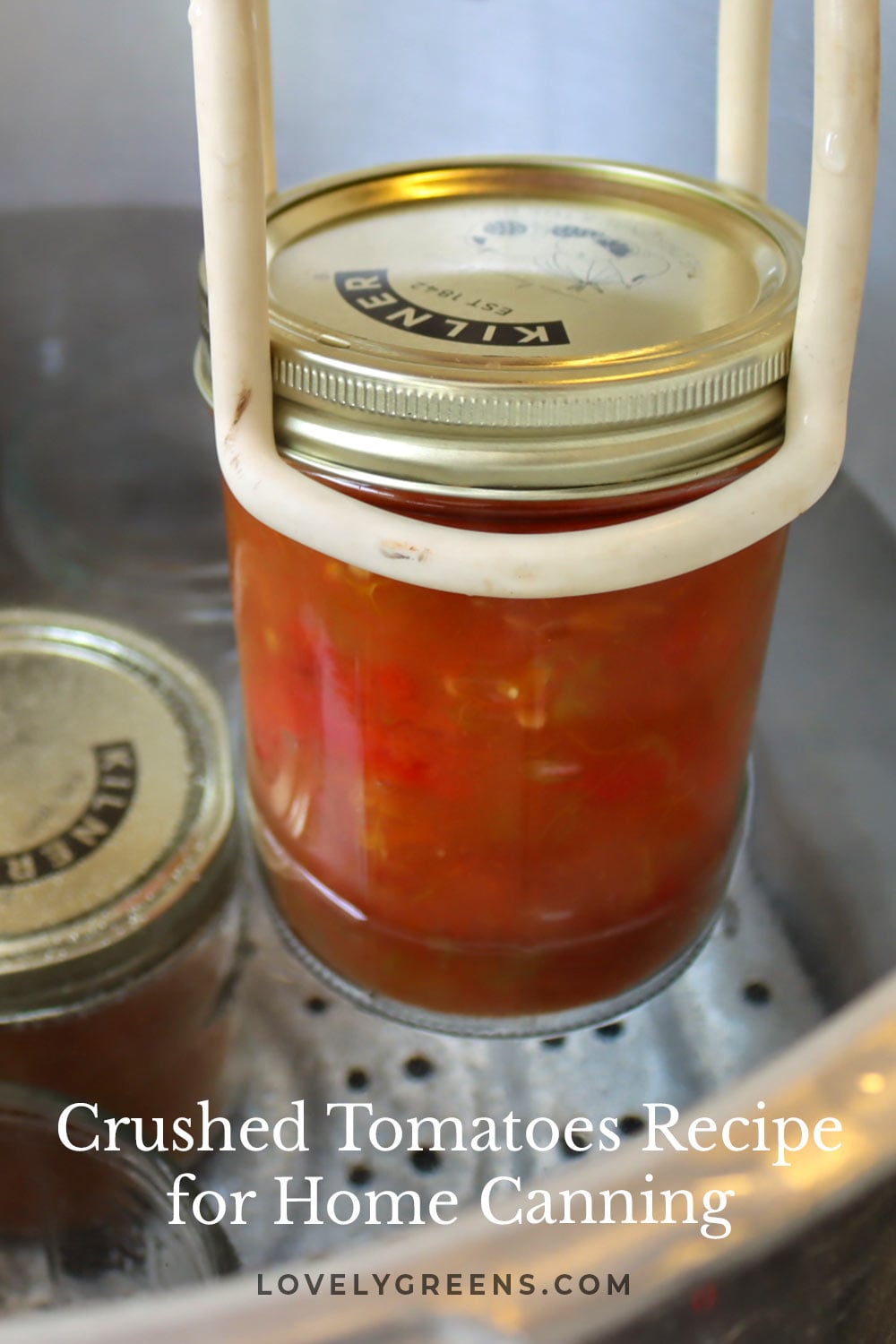
Canning is placing cooked food in glass jars and processing them in hot water at a certain temperature and for a specific time. This process destroys microorganisms that could cause illness or spoilage. When the processing time is up and the jars have cooled, you can store them at room temperature for a year or more.
Tomatoes are also one of the easiest vegetables to can because, if you adjust the acid, you can process them in a simple water bath. You can use a tall kitchen pot and avoid investing in expensive equipment. Low-acid preserves, such as green beans and corn, require a pressure canner to make them safe for shelf storage.
How to Can Fresh Tomatoes
Canning tomatoes begins with choosing the best ripe fruit—preserving tomatoes that are soft or about to go over won’t make them taste any better. Then you clean the fruit and remove the stems, skin, and seeds from each. You do this by popping the tomatoes in boiling water, fishing them out with a slotted spoon, and dunking them in cold water.
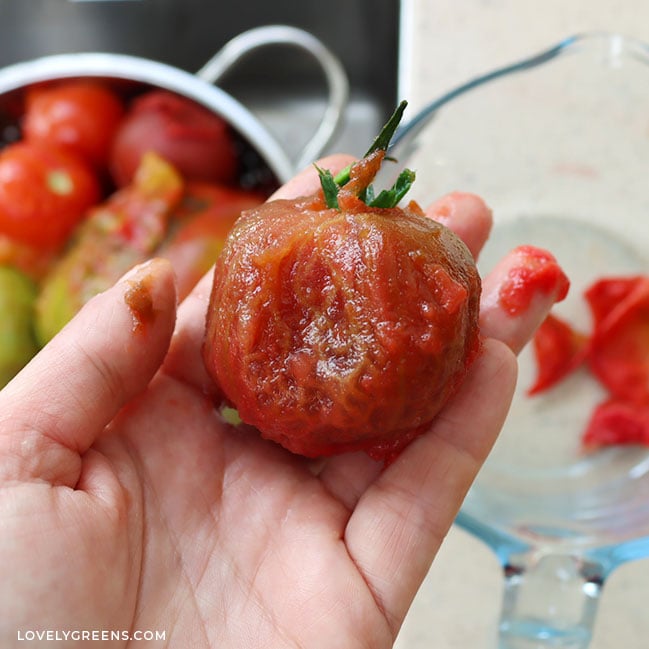
The skins split, making them easy to remove and finish prepping the fruit. You can do all of this the day before canning, but store them in the refrigerator to avoid spoilage.
To can the tomatoes, you cook them and pack them into jars with an acidic ingredient such as lemon juice or citric acid. Add salt on top, if you wish, then screw the lids onto the filled jars and process them in a water bath canner. The process time varies based on your kitchen’s altitude. I’ve left details for this crushed tomatoes recipe in the notes section of the recipe card.
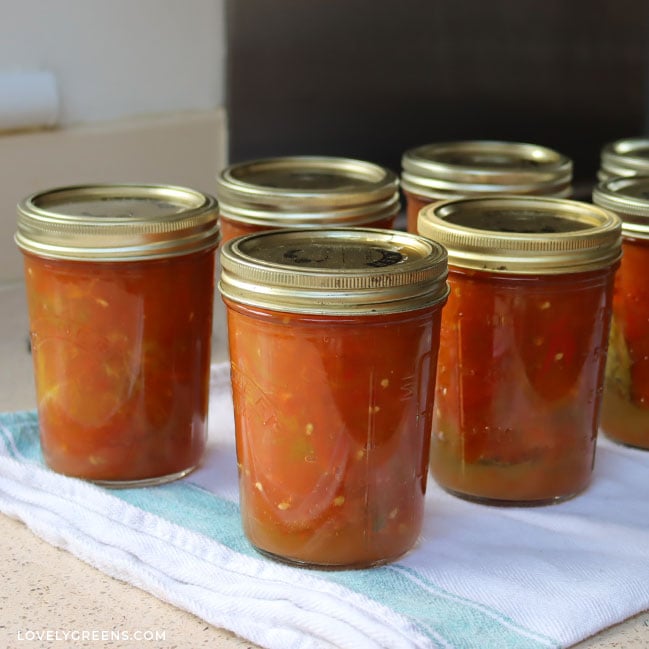
At the end, you lift the hot jars out of the water, let them cool and seal, and then store them in your pantry. Water-bathing the jars like this helps protect the contents from bacteria or mold. It also helps the lids seal and keeps you and your family safe. If you’re unsure or a first-timer, I’ve included plenty of photos in the instructions to guide you.
More Tomato Recipes
Before we move on to making canned crushed tomatoes, here are a few recipes and tips. First, you will have a lot of tomato skins left over as you prep your fruit for this recipe. Instead of throwing them away or composting them, spread them on a baking tray and roast them in olive oil and sea salt. They store in the fridge for several days, and I’ve added them to everything from pasta dishes to tacos.
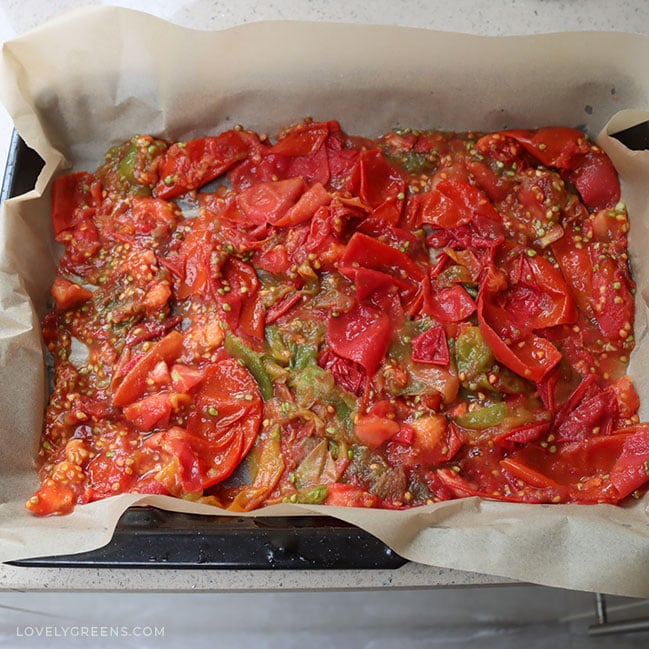
You can also dehydrate the skins, pulse them into a powder, sift them, and store them to use as delicious tomato powder. It adds some incredible tomato flavor and umami! This takes longer than just roasting and using them fresh, but the tomato powder lasts at least a year in the cupboard.

Another thing is that at the end of the gardening year, you might take down your plants and have a lot of unripe fruit—green tomatoes. They are one of my favorite things to preserve, and I have quite a few recipes you can use:
- Green Tomato Chutney Recipe
- Green Tomato Relish Recipe
- Pickled Green Tomatoes Recipe
- Ways to Preserve Food Without Canning
- More Safe Canning Recipes
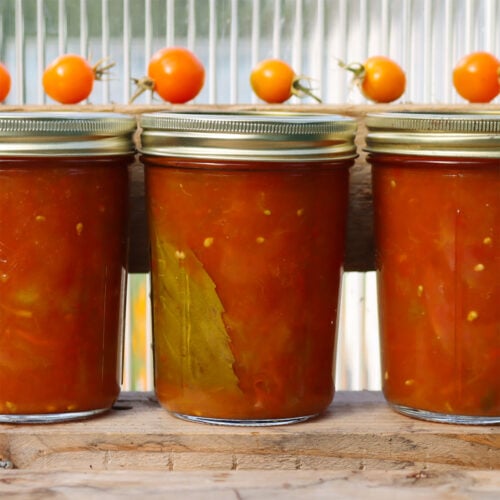
Canned Crushed Tomatoes Recipe
Equipment
- Slotted spoon
- 6 Mason jar (pint) (or 3 quart jars)
Ingredients
- 9 lbs ripe tomatoes (4.1 kg)
- 6 TBSP bottled lemon juice (or 1.5 tsp citric acid)
- 3 tsp canning salt (or additive-free sea salt – optional)
- 6 basil leaves (optional)
Instructions
Prepare the jars
- Follow these steps to clean and heat the jars so that they don't crack during processing.
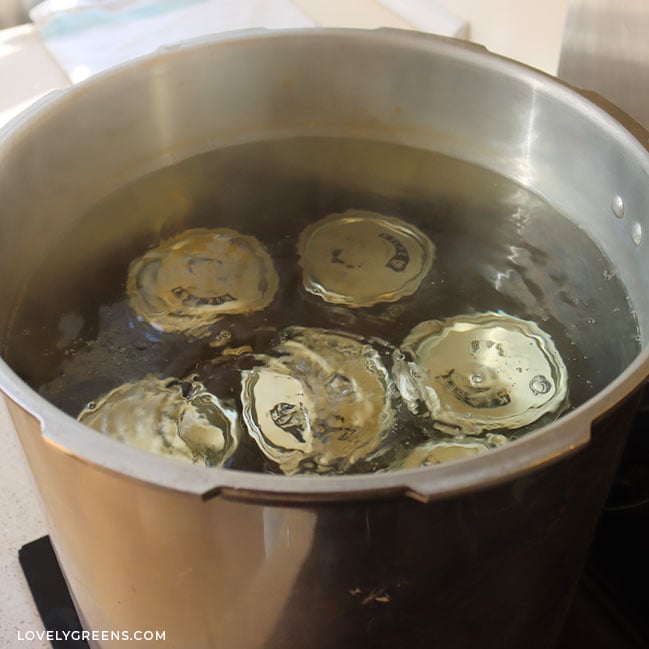
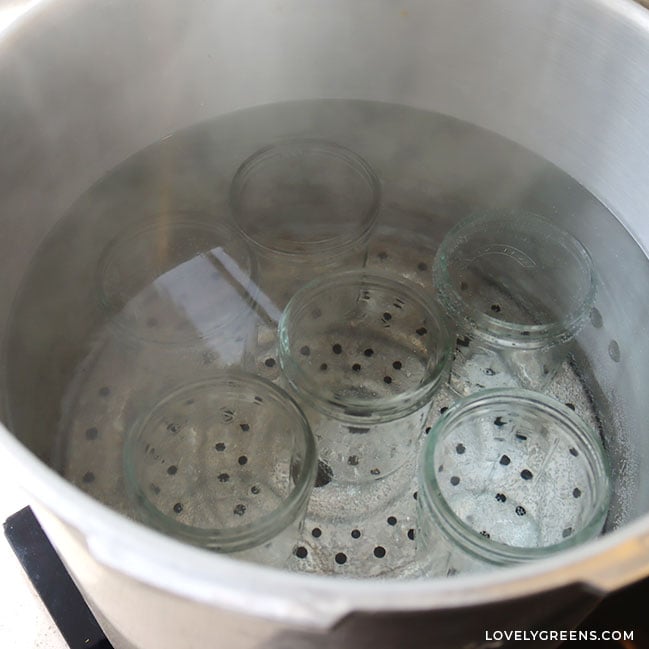
- Remove the lids and rings, then place the empty canning jars on a rack at the bottom of a water bath canner. If you don't have one, you can also use a large, tall pot with a layer of spare canning lid rings on the bottom. The idea is to protect the bottom of the jars from direct heat, and I even used an old folded towel, and that works fine, too.
- Fill the pot with enough water to fill the jars and cover them. Then, heat the water to a gentle simmer—do not boil. Leave the jars in the simmering water until you need to fill them.

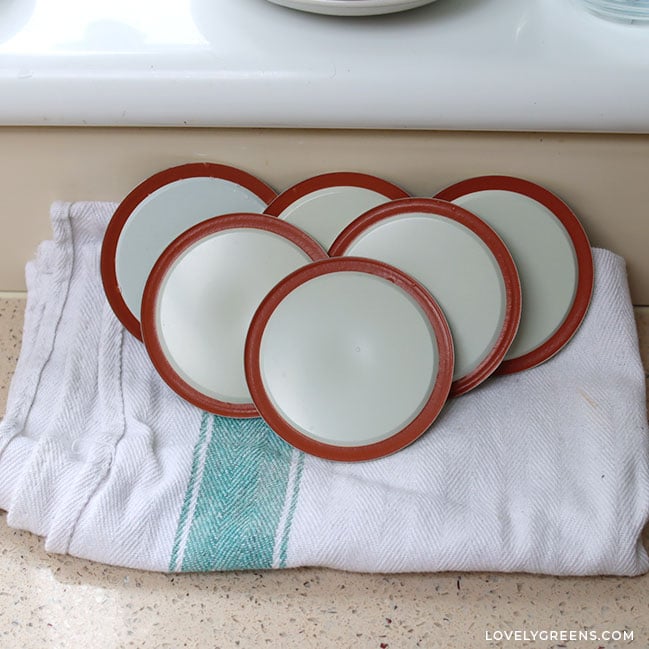
- Wash the lids in warm, soapy water, then rinse and set them aside until later. The rings don't need to be washed and should just be set to one side.
Skin the tomatoes
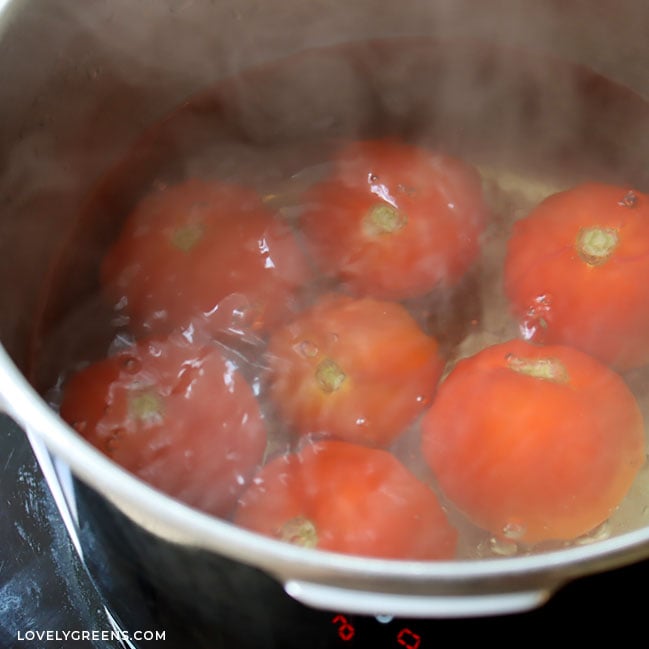
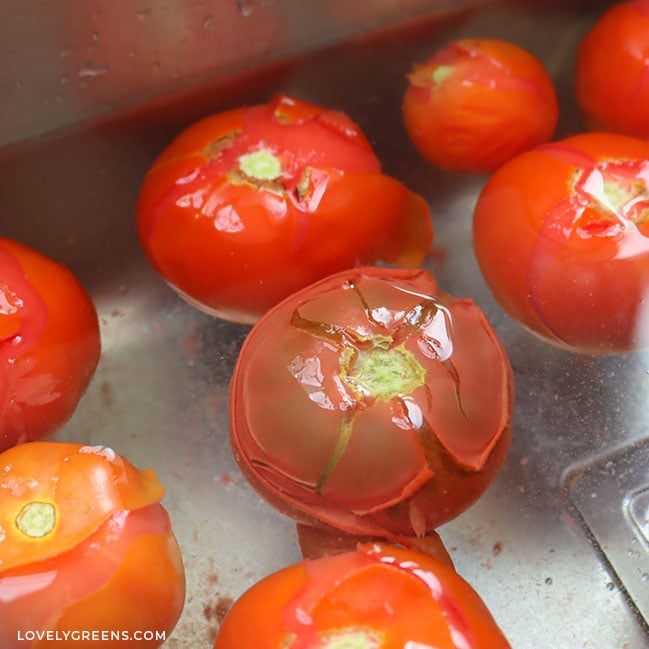
- Tomato skins can give homemade crushed tomatoes a weird texture or bitter flavor. So, first clean the fresh fruit and remove the skins. Rinse off any soil or dust, then drop the tomatoes into a pot of boiling water a few at a time. Leave them there for 30-60 seconds or until you see the skins begin to split.
- Use a slotted spoon to lift the tomatoes from the boiling water, then plunge them into a sink or basin filled with very cold water.
- When they’re cool to the touch, you can easily slip their skins off with your fingers.*
- Remove the cores from the skinned tomatoes, scoop out as many seeds as you can, then roughly chop them.
Cook the tomatoes
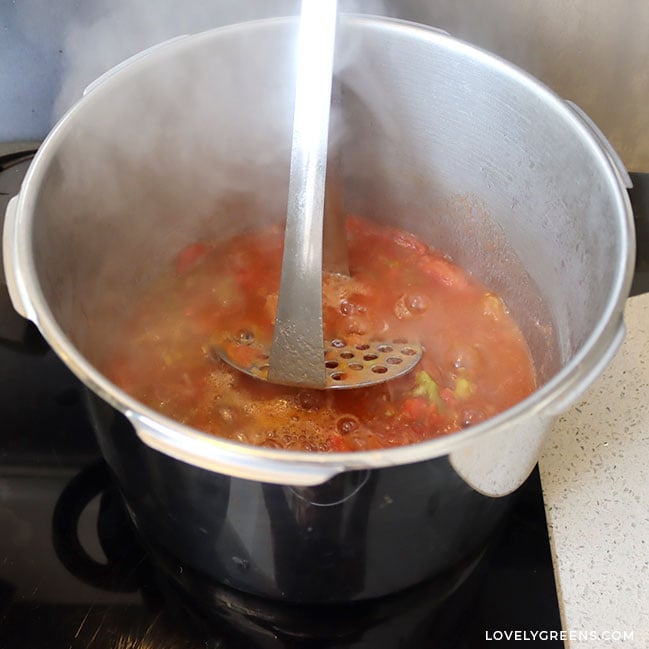
- Scoop two to three cups of chopped tomatoes into a preserving pan and bring them to a boil on medium-high heat. As they begin to heat up, crush them with a potato masher.
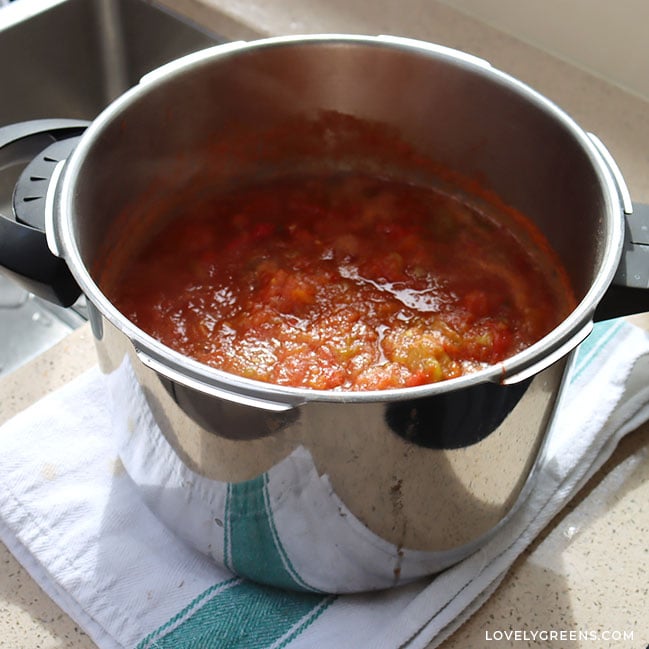
- Add the remaining tomatoes to the pan and bring them to a boil. Once bubbling, cook for five minutes. They'll soften and break down as they cook, but you can mash them with the potato masher if you wish.
Fill the jars
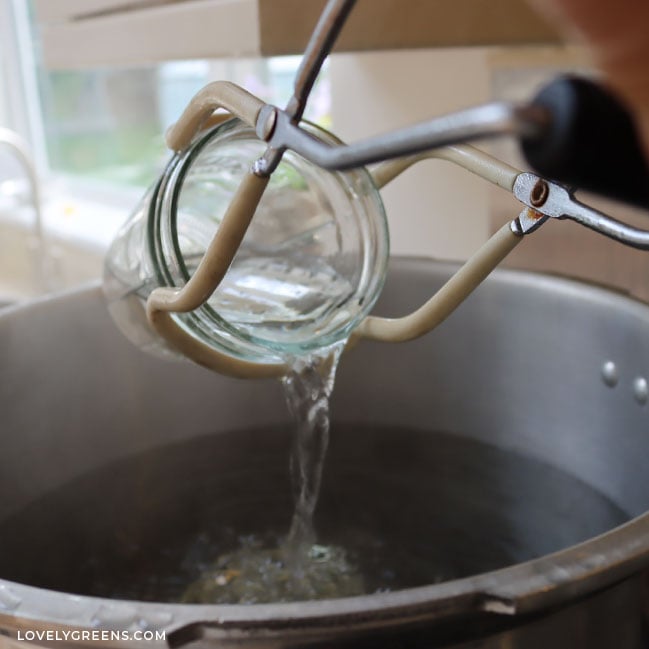
- Use the jar lifter to carefully remove a jar from the simmering water. Tilt the jar to gently pour the hot water back into the pan. Set the jar on the kitchen counter.
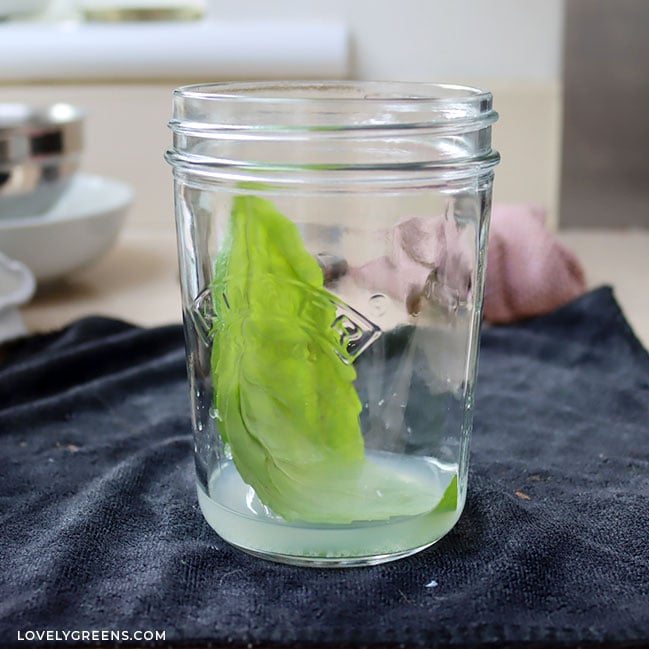
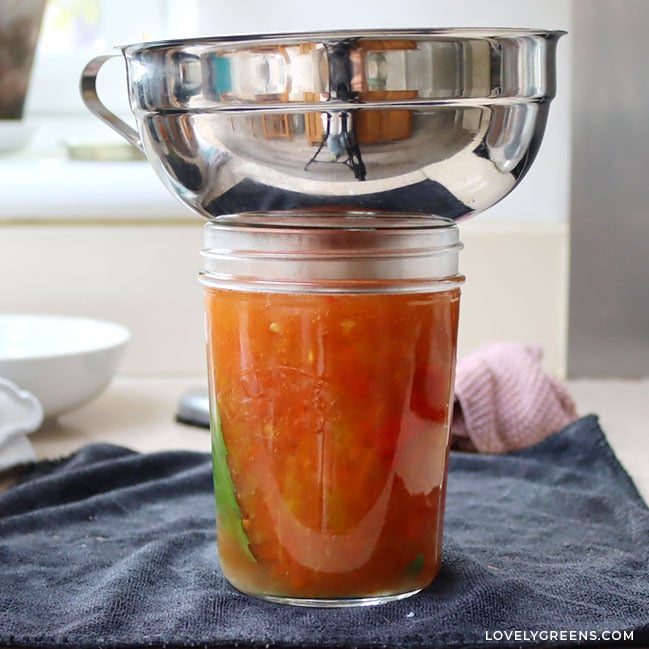
- Add one basil leaf (optional) and 1 Tbsp lemon juice to the bottom of pint jars and double that amount for quarts. Then, using a preserving funnel, pack the crushed tomatoes into the jar, leaving 1/2″ headspace at the tops of the jars.
- If you'd like to season your crushed tomatoes, add 1/2 teaspoon of salt to the top of each pint jar (1 tsp for quarts), then clean the jar rim with a damp cloth. Salt is optional, though.
- Place the lid on the jar and twist the screw-band until finger-tight.**
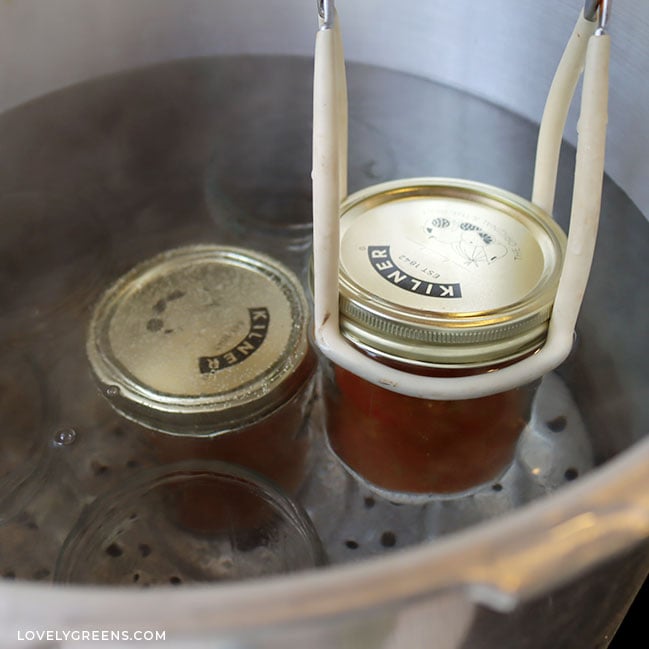
- Using the jar lifter, set the jar back in the hot water. Lift out the next jar and repeat this process until all the jars are filled.
Canning the crushed tomatoes
- The jars should all be back in the tall pot or water bath canner now, and the water should cover them by at least an inch. The jars can touch, but they shouldn't be crammed or wedged in the pot.
- Place a lid on the pot and turn the heat up to high. Bring the water inside to a rolling boil.
- Once it reaches a boil, begin timing. In most places (elevations up to 1000ft), process pint jars for 35 minutes and quart jars for 45 minutes. Adjust for your altitude, though.***
- After the time is up, turn off the heat and remove the lid. Leave the jars in the hot water for five minutes, then lift each out using the jar lifter. Set them on a clean, dry dish towel on the counter. Don't tighten the bands if you notice any that are loose—just leave them to cool for 12-24 hours.
- After they've cooled, check each lid for a seal. They shouldn't flex when you push down in the middle, and they should not come loose if you try to take them off.
- Label the jars and store them in a cool, dry place until you need them. If the seal is intact, the crushed tomatoes should store well for at least a year.
Notes
0–1,000 ft: pints 35 min/ quarts 45 min
1,001–3,000 ft: pints 40 min/ quarts 50 min
3,001–6,000 ft: pints 45 min/ quarts 55 min
Above 6,000 ft: pints 50 min/ quarts 60 min
Love our recipes?
✦ Add Lovely Greens as a Google Trusted Source
I really hope this works. I want to do this. I really hope my daughter will take me to buy the tomatoes.
I love the tomato skin tip. I’ve always just thrown them away.
Same with me Lorna, Now I’m dying to try the powder-making. We have 60 + tomato plants so no shortage of fruit,
Do you need to skin them?
I was canning now , but want to make salsa when my peppers are ready.
You don’t *have* to but the skins come off tomatoes that are bottled and aren’t very appetizing for most people.
Hi Tanya, I also have started canning this year and have bought the newest Ball preserving book. The new rules are that you do not need to simmer your lids and rings anymore. Just wash them in soapy water and then rinse and dry them. New tests have proven that that is better. Procession time for hot pack tomatoes in own juice is 35 min until 1000 feet height.(pints) 45 min for quarts) In pressure canner 20 min on 5 psi, and 15 min on 10 psi for both pints and quarts. If you use half pints as I do as I am on my own, you use the timing for the pints. I ordered some items at Spontex via the Ball website, but most in the States via Lucky vitamine. Even with the added transport and customs it is still substantially cheaper than in the UK. Eveline
I am interested in the fact that you say that the salt is optional. We don’t like a lot of salt in food and want to bottle tomatoes without, but I have also read that you need the salt to prevent botulism. Does the lemon juice do the same thing?
The acidity of tomatoes is what helps them preserve well – the same stands for other canned fruits which also don’t need salt.
I bottle whole tomatoes and add Italian seasoning and garlic for spaghetti sauce when u are ready for spaghetti just drain some of the juice out then dump in a blender and warm up on stove my family lives it and it is easier than the 8 hour process.
Jill, how much Italian Seasoning and garlic did you use for a pint of tomotoes too can ? Thanks in advance ?
I just did the same thing last weekend, primarily for the same exact reason. I want to know where my food comes from, as much as possible, and know it's the safest I can get it. I canned 28 jars of crushed tomatoes and am working on whole tomatoes and more tomato sauce this weekend. I, too, had to supplement my garden tomatoes with purchased ones, however, I was fortunate to be able to pick them at a local u-pick farm so they were fresh. Great article (as all your articles are). I truly enjoy reading your blog – it inspires me.
I read the same article, very scary. I wanted to can my own tomato sauce, pizza sauce and salsa for the whole year but now I'm rethinking the tomato sauce. Wow, does it take a LONG time to cook down. Yesterday I put 56 cups of tomato juice in my biggest pot, it took 8 hours to cook down. I got 4 quarts and 1 pint jar out of the whole batch. I agree with Sunnybrook Farm you should look into the Tattler Lids, they are BPA free. I started using them a few years ago after I found out that regular canning lids contain BPA.
I've just purchased twelve of the Tattler lids off Ebay and I'm looking forward to experimenting with them. It seems that the only thing you need to replace is the rubber ring?
Eight hours for tomato sauce sounds like a very long time! I buy tomato passata in bottles at the shop so I'm not likely to bother with making sauce either. Chopped tomatoes on the other hand are really quick and versatile for me – I use them in everything from chili, pasta and soup.
Good for you for even doing it….we make tomato (pasta) sauce base each year the Italian way, and we buy our crates of tomatoes from local growers….we couldnt grow way enough to make the couple of hundred bottles that we need for the year…just for our family!
A couple hundred bottles? Flip, maybe I need to make some more!
I would be happy to send you a copy of the canning book if you would like one! They generally sell them in all of the grocery stores in the US..the tomatoes look delicious!
I tend to make up my pasta sauces and soups and ketchups and then store these…I have never just stored the tomatoes so I don't think I would do this but I have taken on board the tip about the tomatoes skins. Of course I doubt I will be doing any of this at all until next year as so far I have had about 8 ripe cherry tomatoes.. :-(
Sorry to hear about your tomatoes – lots of people have been having issues with them this year.
Nothing like tomatoes in jars, I have them for lunch in the winter since I have so many, I have to use them every chance I get. If you can find Tattler lids, they can be used over for years so you won't have to keep looking for lids if they are hard to find.
They are rather cheerful looking aren't they? Especially when you have a wall of them sitting in the cellar like someone I know ;)
Good tip on the Tattler lids – I'm going to Google them right now.
Just bought a pack of 12 off Ebay to try…it's a shame they're not available in the UK but fortunately it's possible to get them shipped here from the US.
Can I use ordinary Jars with ordinary Lids, that I have kept aside for this purpose?
Also is it possible to just pour boiling water over my Tommy Toes (little ones) and jar them without all the cooking?
The lemon juice that is mentioned – can it be fresh?
Hi Glenda, if you are referring to recycled jam jars and lids, then no, you should not use them for bottling tomatoes. Stick to preserving jars and preserving lids (either Tattler or traditional lids) since the glass won’t crack during the water bathing process.